Introduction
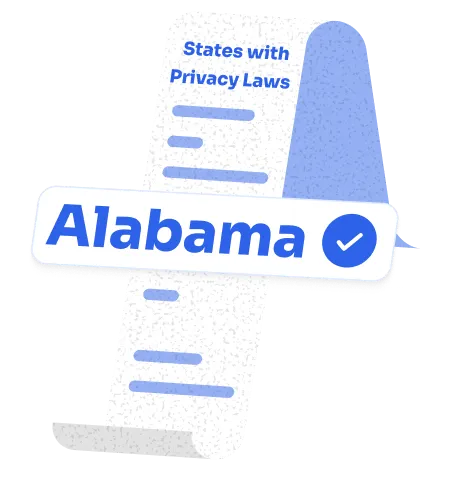
Alabama has officially joined the growing number of U.S. states adopting comprehensive consumer privacy legislation. With the passage of the Alabama Personal Data Protection Act (APDPA), businesses that conduct business in Alabama or provide services targeted to Alabama residents must reassess how they collect, process, share, and monetize consumer data. The law reflects the broader expansion of state consumer privacy laws across the United States and introduces new compliance obligations for organizations engaged in targeted advertising, analytics services, marketing services, and data sharing arrangements.
For e-commerce brands, SaaS companies, Shopify merchants, advertising networks, and organizations processing personal data at scale, the APDPA creates a new layer of operational and legal requirements. Businesses must evaluate whether their data processing activities fall within the law’s low applicability threshold, determine whether they qualify for exemptions, and establish workflows for consumer rights requests, sensitive data processing, opt-out obligations, and vendor governance. While the statute is considered more business-friendly than some other state privacy laws, it still imposes significant obligations tied to transparency, security, and consumer choice.
Alabama Personal Data Protection (APDPA)
The Alabama Personal Data Protection Act is Alabama’s first comprehensive consumer privacy statute and places the state among the growing list of jurisdictions regulating consumer data privacy at the state level. Signed into law by Governor Kay Ivey in April 2026, the APDPA establishes rules governing the collection, processing, and sale of personal data and targeted advertising activities involving Alabama residents. The law becomes effective on May 1, 2027.
The law applies to organizations doing business in Alabama or offering products and services to Alabama residents, if they either process the personal data of over 25,000 consumers or earn more than 25% of their gross revenue from selling personal data. Importantly, the statute excludes personal data processed solely for completing a payment transaction when calculating the 25,000-consumer threshold. The APDPA grants exclusive enforcement authority to the Alabama Attorney General and does not establish a private right of action. Before civil penalties are imposed, organizations receive a 45-day cure period to address alleged violations. Civil penalties may reach up to $15,000 per violation if businesses fail to cure violations within the designated timeframe.
Applicability And Thresholds Under This Comprehensive Privacy Law
Organizations must first determine whether they conduct business in Alabama or offer services targeted toward Alabama residents. This analysis goes beyond physical presence and includes digital commerce operations, SaaS platforms, mobile apps, advertising technology providers, and businesses engaged in online consumer profiling. Even organizations without offices in Alabama may fall within scope if they process consumer data associated with Alabama residents.
The APDPA introduces one of the lowest applicability thresholds among state consumer privacy laws. Businesses processing personal data of more than 25,000 consumers may qualify under the law, excluding personal data controlled or processed solely for completing a payment transaction. Companies must also evaluate whether more than 25% of their gross revenue derives from data sales involving monetary consideration or other valuable consideration. Businesses engaged in data sharing arrangements, marketing services, or providing analytics services should carefully assess whether those activities qualify as the sale of personal data under Alabama law. Controllers and processors—whether an individual or legal entity, including any legal entity that determines the purposes and means of processing or processes personal data on behalf of another—must also classify their respective responsibilities for processing personal data, maintaining reasonable administrative safeguards, and responding to authenticated consumer requests.
Exemptions And Scope: Entity And Data Exemptions
Like many state privacy law frameworks, the APDPA contains multiple entity-level and data-level exemptions. The law exempts certain small businesses and nonprofits, particularly organizations with fewer than 500 employees that do not sell personal data. Nonprofits with fewer than 100 employees also benefit from exemptions if they do not engage in data sales involving consumer personal data. These exemptions significantly reduce compliance burdens for smaller organizations operating within Alabama.
The law additionally excludes several categories of federally regulated entities and protected data sets. Financial institutions governed by the Gramm-Leach-Bliley Act, business associates subject to HIPAA requirements, and entities regulated under the Fair Credit Reporting Act, Driver’s Privacy Protection Act, and Farm Credit Act receive exemptions. The statute also excludes protected health information, data regulated under federal law, and certain information processed by national securities associations. Political parties, political action committees, higher education institutions, and trade associations explicitly authorized by federal statutes also fall outside the law’s scope. Businesses should carefully identify exempt processing activities and segregate excluded data processed solely under sector-specific regulatory frameworks.

Consumer Rights And Consumer Data Privacy Protections
The APDPA grants Alabama residents several core consumer rights regarding their consumer’s personal data. Consumers may access their personal data collected by businesses, correct inaccuracies, request deletion, obtain portable copies of their personal data, and opt-out of targeted advertising or data sales. Controllers also may not discriminate against consumers for exercising opt-out or other APDPA rights, such as by denying goods or charging different prices. These rights mirror many obligations already present within broader state consumer privacy laws while reinforcing transparency obligations for organizations processing data at scale.
Businesses must implement mechanisms enabling consumers to opt-out of targeted advertising, personal data shared for monetary consideration, and certain profiling activities involving solely automated significant decisions. Organizations processing sensitive data must obtain affirmative consent before collection or use. Sensitive data under the APDPA includes genetic or biometric data, racial or ethnic origin, immigration status, religious beliefs, precise geolocation, and other categories capable of creating elevated privacy risks. Companies engaged in advertising technologies, analytics services, or behavioral profiling should ensure that consent management systems properly address these heightened obligations.
Make Your Shopify Store GDPR & Cookie Compliant in Minutes
Start Free on ShopifyConsumer Rights Requests: Workflows, Timelines, And Verification
Organizations subject to the APDPA should establish structured workflows for handling consumer rights requests efficiently and securely. Businesses must provide accessible intake channels allowing consumers to submit authenticated consumer requests related to access, deletion, correction, portability, and opt-out rights. Companies operating ecommerce storefronts should ensure request portals are available across websites, mobile experiences, and customer support channels.
Verification procedures must align with risk-based standards to reduce fraud and unauthorized disclosure of consumer data. Controllers should document internal protocols governing identity verification, escalation procedures, and denial criteria. Under the APDPA, organizations generally have 45 days to respond to consumer rights requests, with one additional 45-day extension permitted when reasonably necessary. Businesses should also maintain records documenting denied requests and legal justifications supporting those decisions in the event of attorney general investigations or enforcement inquiries.
Data Mapping, Data Sharing, And Data Transfers
Comprehensive data mapping exercises are essential for APDPA compliance. Businesses should inventory personal and sensitive data collected from Alabama residents across websites, mobile apps, CRM systems, analytics platforms, advertising tools, and vendor environments. Data mapping enables organizations to identify personal data processed, assess whether sensitive data categories are involved, and determine how information flows across internal and external systems.
Organizations should additionally review cross-border data transfers and data sharing arrangements involving third-party vendors, advertising networks, and service providers. Businesses providing marketing services solely on behalf of another entity may still trigger compliance obligations depending on how data is reused or monetized. Companies should evaluate whether business shares consumer data in ways that constitute data sales under Alabama law, which is broader than in some states because it can reach non-monetary data-sharing arrangements. A sale includes transfers for monetary or other valuable consideration when the controller receives a material benefit and the recipient is not restricted in its subsequent use of the data. By contrast, disclosures for analytics services or marketing services provided solely to the controller are excluded from that definition. Vendor contracts should include restrictions governing reuse, retention, onward transfers, and secondary processing activities to reduce regulatory risk.
Sensitive Data And Children’s Data Controls
The APDPA establishes heightened obligations for sensitive data processing. Businesses must classify sensitive data categories carefully and apply additional consent requirements before processing such information. Sensitive data includes biometric data processed for identification purposes, genetic or biometric data, information revealing racial or ethnic origin, religious beliefs, citizenship status, immigration status, and precise geolocation information.
The law also imposes enhanced protections for children’s data. Organizations must comply with COPPA-aligned requirements for known children under 13 and obtain consent before engaging in targeted advertising involving minors between 13 and 15 years old. E-commerce businesses and digital advertising platforms should evaluate age-gating mechanisms, parental consent procedures, and advertising segmentation practices to avoid unlawful profiling activities involving minors.
Data Protection Assessments And Privacy-By-Design Practices
Unlike several other state consumer privacy laws, the APDPA does not expressly require mandatory data protection impact assessments for high-risk processing activities. However, organizations should still conduct internal data protection assessments when engaging in targeted advertising, profiling, sensitive data processing, or large-scale data sharing arrangements. These assessments help demonstrate accountability and reduce enforcement risk.
Privacy-by-design practices remain critical despite the absence of formal DPIA obligations. Businesses should integrate privacy considerations into checkout flows, analytics deployments, cookie management systems, and marketing technologies from the earliest stages of development. Controllers processing consumer data at scale should also document decision-making processes, security safeguards, and risk mitigation strategies to strengthen compliance readiness and demonstrate good-faith governance efforts.
Processor Obligations, Contracts, And Financial Institutions Considerations
The APDPA imposes contractual obligations on processors handling personal data on behalf of controllers. Businesses should update data processing agreements to define processing instructions, confidentiality obligations, deletion requirements, and assistance obligations related to consumer rights fulfillment. Processor agreements should also require controllers and processors to establish, implement, and maintain reasonable administrative, technical, and physical data security practices appropriate to the volume and nature of the personal data, along with cooperation procedures during regulatory investigations or security incidents.
Financial institutions and affiliated entities must carefully analyze overlapping obligations under state law and federal law frameworks, such as GLBA. While many GLBA-covered activities receive exemptions, organizations operating mixed-service environments may still process non-exempt consumer data. Legal and compliance teams should coordinate assessments involving banking services, payment transaction activities, analytics services, and digital marketing functions to identify operational overlaps requiring APDPA controls.

Opt-Out Mechanisms, Preference Signals, And Notices
Organizations subject to the APDPA must provide clear and conspicuous opt-out mechanisms allowing consumers to opt-out of targeted advertising and data sales. Privacy notices should outline the types of personal data collected, the reasons for processing this data, the categories of third parties who receive the data, and clarifications of consumer rights. Businesses engaged in targeted advertising should ensure disclosures accurately reflect advertising technologies, cookies, analytics platforms, and behavioral profiling practices.
The APDPA also anticipates broader adoption of universal opt-out mechanisms and opt-out preference signals. Businesses should begin evaluating support for Global Privacy Control (GPC) technologies and document conflict-resolution procedures when browser signals conflict with account-level settings. Alabama’s framework requires organizations to recognize universal opt-out mechanisms by January 1, 2028, making early implementation planning particularly important for e-commerce and advertising-driven businesses.
Enforcement, Penalties, And Risk Management
Enforcement authority under the APDPA rests exclusively with the Alabama Attorney General. Consumers cannot pursue private lawsuits under the statute, making attorney general enforcement the primary regulatory risk. Businesses should nevertheless prepare comprehensive response strategies for investigations, notices of violation, and cure-period remediation efforts.
The law allows civil penalties of up to $15,000 for each violation after the 45-day cure period has expired. Organizations should develop incident response playbooks addressing privacy complaints, consumer rights failures, and unlawful data processing allegations. Monitoring attorney general guidance, enforcement priorities, and evolving interpretations of sale definitions or targeted advertising obligations will be critical as implementation deadlines approach.
A Google-Approved Consent Platform for Shopify
Pandectes is an official Google Certified Consent Management Platform and is fully compatible with Google Consent Mode v2 and global privacy regulations.
View the App on ShopifySteps To Prepare For This Data Privacy Law As A Shopify Merchant
Shopify merchants should begin compliance preparation well before the APDPA effective date. Businesses should first conduct a comprehensive review of cookies, pixels, tracking technologies, and third-party integrations across storefronts. A Pandectes store scan can help identify tracking gaps, consent management weaknesses, and data sharing activities potentially qualifying as targeted advertising or data sales.
Merchants should also deploy compliant cookie banners, consent tracking tools, multilingual privacy notices, and accessible opt-out pages across storefronts and checkout environments. Internal training is equally important. Customer support teams, developers, marketers, and compliance personnel should understand APDPA workflows involving consumer rights requests, sensitive data processing, universal opt-out mechanisms, and vendor governance obligations.
Next Steps And Resources
Organizations preparing for APDPA compliance should establish cross-functional governance programs involving legal, IT, marketing, security, and customer support teams. Conducting a readiness workshop can help businesses identify operational gaps, assess vendor risks, and prioritize remediation efforts before the law becomes effective.
Businesses should also monitor ongoing developments involving state privacy law enforcement trends, attorney general guidance, and future amendments affecting consumer privacy laws nationwide. As additional states continue adopting comprehensive consumer privacy statutes, organizations benefit from scalable compliance frameworks capable of supporting evolving regulatory requirements across multiple jurisdictions.
Conclusion
The Alabama Personal Data Protection Act significantly expands the growing patchwork of U.S. state consumer privacy laws and introduces new obligations for businesses handling consumer data involving Alabama residents. Although the law contains broad exemptions and a business-friendly cure period, organizations must still address operational requirements related to targeted advertising, sensitive data, consumer rights requests, data sharing, and vendor oversight.
Businesses that proactively implement data mapping, consent management, privacy-by-design practices, and comprehensive governance workflows will be better positioned to reduce enforcement risk and build long-term consumer trust. For Shopify merchants and digital businesses alike, preparing early for APDPA compliance is essential as privacy expectations and regulatory scrutiny continue to intensify across the United States.