Introduction
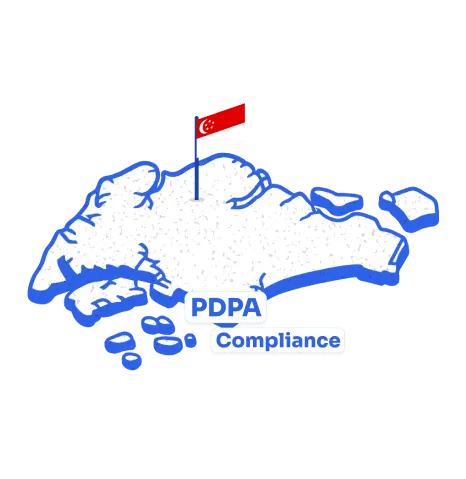
Singapore has established one of the most structured and business-oriented privacy regimes in Asia through the Personal Data Protection Act (PDPA). For businesses operating online, especially e-commerce brands and Shopify merchants, understanding how the Personal Data Protection Act applies is no longer optional. Organizations collecting customer names, telephone number details, business email addresses, shipping information, payment records, or marketing preferences must implement clear data protection policies and demonstrate compliance with Singapore’s evolving regulatory frameworks.
This guide explains the most important PDPA compliance requirements in Singapore for merchants, marketers, SaaS companies, and digital businesses handling personal data in Singapore. It covers practical steps for managing consent, safeguarding personal data, handling data breach incidents, managing cross-border transfers, and complying with data protection obligations enforced by the Personal Data Protection Commission (PDPC). It is designed for privacy teams, e-commerce operators, legal departments, developers, and business owners seeking actionable compliance guidance rather than purely theoretical explanations.
For Shopify merchants, compliance can become especially complex because stores frequently use cookies, analytics tools, advertising trackers, email marketing software, and cross-border data flows. Pandectes helps merchants simplify consent management, organize cookie compliance workflows, and maintain auditable consent records that support broader PDPA compliance initiatives.
Quick Overview Of PDPA
The Personal Data Protection Act is Singapore’s primary privacy legislation governing how private-sector organizations collect, use, disclose, and retain personal data. Under the law, personal data refers to any data about an identifiable individual, whether true or not. This includes names, business contact information, Singapore telephone numbers, business address records, business telephone number details, business fax number information, IP addresses, identifiers, and online activity connected to an individual.
The PDPC acts as the regulator responsible for administering and enforcing the Personal Data Protection Act. The commission investigates complaints, issues advisory guidelines, publishes enforcement actions, and can impose financial penalties for non-compliance. Organizations that fail to implement reasonable security arrangements or fail to protect personal data may face corrective directions and substantial monetary penalties. The PDPA also includes mandatory breach notification obligations for qualifying incidents.
The law has extraterritorial implications as well. Offshore businesses processing personal data in Singapore or targeting Singapore residents may still fall within the scope of Singapore data protection laws. A foreign e-commerce business operating a Shopify store and sending marketing messages to Singapore customers may therefore need to comply with applicable PDPA obligations even if the organization itself is located overseas.
Who Must Comply: Scope and Data Protection Laws
The PDPA primarily applies to private-sector organizations. Companies, partnerships, associations, and online businesses that process personal data for business purposes are generally considered subject to the law. Organizations collecting customer data through websites, loyalty programs, e-commerce stores, mobile applications, or electronic mail campaigns must ensure their practices align with Singapore’s protection obligation and purpose limitation requirements.
The public sector is largely governed by separate public agency rules rather than the PDPA itself. However, private organizations providing services to government-linked entities may still need to meet contractual privacy requirements that align with PDPA standards. Similarly, vendors acting as a data controller or processor for another organization must comply with contractual obligations regarding security measures and disclosure of personal data.
The law also applies to offshore processors handling personal data held on behalf of Singapore businesses. Common exemptions include activities performed on a personal or domestic basis, an individual acting in a purely personal capacity, or certain journalistic and legal functions. The domestic basis exemption does not apply when commercial processing activities are involved.
Core PDPA Obligations and Data Protection Obligations
A compliant organization should implement an accountability framework demonstrating how it manages privacy risks. This includes documented data protection policies, governance procedures, employee training programs, vendor oversight mechanisms, and processes for responding to data subjects exercising their rights. Businesses should maintain evidence capable of demonstrating compliance during investigations or audits.
Organizations must appoint a data protection officer responsible for overseeing privacy compliance. The DPO’s business email and contact details should be publicly accessible so individuals can raise concerns or submit requests. Publishing DPO contact details is a mandatory requirement under Singapore law. Businesses should also maintain records showing how consent was obtained and how personal data collected is used or disclosed.
Retention limitation obligations require organizations to stop retaining personal data once it no longer serves a legal purpose or business need. Retaining outdated records indefinitely increases breach exposure and creates unnecessary compliance risks. Companies should therefore implement retention and deletion schedules aligned with operational and legal obligations.

Consent, Purpose and Notification Obligations
Consent remains one of the most important foundations of PDPA compliance. Organizations must obtain clear and unambiguous consent before collecting, using, or disclosing personal data unless an exception applies. Individuals should understand why their information is being collected, how it will be used, and whether it will be shared with third parties.
Purpose limitation rules require businesses to inform individuals of the purposes for which data is collected before or at the point of collection. Privacy notices should be easy to understand and avoid vague descriptions. A reasonable person should consider the collection purpose appropriate under the circumstances. Consent interfaces should also make it easy for users to withdraw consent without unnecessary barriers.
For e-commerce websites, organizations should display privacy notices prominently during checkout, newsletter signup, account registration, and cookie interactions. Businesses sending marketing messages through electronic mail or SMS should also ensure compliance with the Spam Control Act, particularly regarding unsubscribe mechanisms and consent requirements.
Make Your Shopify Store GDPR & Cookie Compliant in Minutes
Start Free on ShopifyPractical Consent UI Tips For Shopify Stores
Shopify merchants should design consent interfaces that are granular, transparent, and user-friendly. Cookie banners should separate essential cookies from analytics, advertising, and personalization technologies. Pre-ticked boxes should generally be avoided because they may not satisfy the standard for unambiguous consent.
A compliant banner should explain the categories of cookies being used, the business purposes behind tracking technologies, and any third parties receiving information through trackers. Users should be able to accept, reject, or customize preferences easily. Merchants should also ensure consent mechanisms work properly across mobile devices and international storefronts.
Consent receipts should be stored with timestamps, IP logs, banner version details, and user preference records. These logs help demonstrate compliance if the organization later faces regulatory scrutiny or disputes regarding an individual’s consent. Maintaining structured consent evidence is particularly important for organizations operating at a significant scale.
Access, Correction and Accuracy Obligations
Individuals have the right to request access to personal data held by organizations and to request corrections where information is inaccurate or incomplete. Businesses should therefore establish a structured DSAR intake workflow capable of handling requests efficiently and securely.
Before releasing personal data, organizations should verify identity carefully to reduce risks of unauthorized access or disclosure to unauthorized parties. Verification methods should balance security with usability and avoid excessive collection practices. Businesses should document response timelines and maintain records of request-handling activities.
Data accuracy obligations also require organizations to make reasonable efforts to ensure personal data used for decision-making purposes is accurate and complete. Merchants should schedule periodic reviews of customer databases, shipping details, telephone number records, and account information to reduce operational and compliance risks.
Protection and Retention Obligations
The PDPA mandates that organizations establish appropriate security measures to protect personal data from unauthorized access, use, disclosure, copying, modification, or disposal. Security measures should align with the volume and sensitivity of personal data processed.
Businesses should implement encryption at rest and in transit, strong password policies, multifactor authentication, access controls, endpoint protection, and vulnerability management procedures. Protection obligations become especially important where organizations process financial details, authentication credentials, or nric numbers.
Role-based access controls help reduce internal misuse by limiting employee access to only necessary systems and datasets. Automated deletion workflows should also remove outdated customer records once retention periods expire. Retention limitation practices significantly reduce breach exposure and compliance burdens.
Cross-Border Transfers and Transfer Limitation
Many Shopify stores rely on international hosting providers, payment processors, analytics vendors, customer support tools, and advertising platforms. As a result, cross-border transfers are common in e-commerce operations. Under Singapore law, organizations remain responsible for ensuring that transferred personal data receives comparable protection overseas.
Businesses should map all cross-border data flows involving vendors, affiliates, cloud providers, and external processors. Transfer agreements should include contractual safeguards addressing confidentiality, retention limitation, breach handling, and security obligations. Organizations should also assess whether overseas vendors maintain appropriate technical and organizational protections.
Documented transfer risk assessments are increasingly important because regulators expect organizations to understand where data travels and what risks may arise during processing activities. This includes evaluating exposure to dictionary attacks, weak authentication controls, or unauthorized disclosure in foreign jurisdictions.
Security, Data Breach Response and Breach Notification
Every organization handling personal data should maintain a documented incident response plan. A structured response framework helps teams contain incidents quickly, preserve evidence, minimize operational disruption, and comply with breach notification obligations.
Businesses should run tabletop exercises periodically to test their ability to respond to ransomware attacks, phishing incidents, cloud misconfigurations, credential theft, or accidental disclosure events. Regular testing improves coordination between IT, legal, compliance, communications, and executive leadership teams.
Under Singapore’s mandatory breach notification regime, organizations must notify the PDPC and affected individuals where a breach is likely to result in significant harm or affects 500 or more individuals. Organizations must notify the PDPC within three calendar days after determining a breach is notifiable.
Notifiable Data Breaches: Steps After Detection
Once a potential data breach is discovered, organizations should first contain and secure affected systems. This may involve isolating servers, revoking compromised credentials, disabling exposed APIs, or restricting network access to prevent further compromise.
Organizations should preserve forensic evidence immediately because logs, access histories, and affected systems may later become critical during investigations. Premature deletion of evidence can undermine incident assessments and complicate regulatory inquiries.
After initial containment, organizations should assess whether affected individuals face significant harm. Breaches involving authentication credentials, financial records, health information, or nric numbers may trigger mandatory notification obligations under Singapore law.
A Google-Approved Consent Platform for Shopify
Pandectes is an official Google Certified Consent Management Platform and is fully compatible with Google Consent Mode v2 and global privacy regulations.
View the App on ShopifyNotification Content Checklist
A compliant breach notification should include a clear description of the incident, the timing of discovery, the systems affected, and the categories of personal data compromised. Businesses should explain whether names, telephone number records, business contact information, payment details, or authentication credentials were exposed.
Organizations should also provide remediation guidance for affected individuals. This may include password resets, fraud monitoring recommendations, phishing awareness guidance, or account protection measures. Notification language should remain clear and understandable rather than overly technical.
Businesses should identify the organization’s response contact, typically the data protection officer or incident response representative. Prompt and transparent communication can help reduce reputational damage and demonstrate accountability during investigations.

Enforcement, Financial Penalties and Non-Compliance Risks
The PDPC has the authority to investigate complaints, issue enforcement actions, and impose financial penalties for non-compliance. Organizations failing to implement reasonable security arrangements, mishandling consent, or improperly disclosing personal data may face significant reputational and financial consequences.
Singapore’s enhanced penalty framework allows fines reaching up to 10% of annual turnover in Singapore for larger organizations in certain circumstances. Regulators may also consider aggravating factors such as repeated violations, poor governance, inadequate security measures, or delayed breach notification.
The PDPC has increasingly emphasized misuse of nric numbers and weak authentication practices. Private organizations must stop using NRIC numbers for authentication by the end of 2026, with stricter enforcement expected afterward.
Practical Roadmap To Achieve PDPA Compliance
Organizations should begin by mapping a comprehensive personal data inventory, identifying what information is collected, where it is stored, who can access it, and which vendors receive it. This inventory forms the foundation of an effective Data Protection Management Program.
Businesses launching high-risk projects should conduct privacy impact assessments before deployment. DPIAs help identify compliance gaps involving sensitive data, profiling technologies, targeted advertising practices, or large-scale analytics operations.
Employee training also remains critical. Staff should understand phishing risks, secure handling procedures, consent requirements, and incident escalation obligations. Human error remains one of the leading causes of data breach incidents across industries.
Handling Data Subject Requests and Portability
Organizations should establish clear intake channels for data subjects requesting access, correction, deletion, or portability. Dedicated web forms, privacy email addresses, and authenticated account portals can streamline request management.
Internal SLAs help ensure requests are processed consistently and within reasonable timeframes. Teams should track request status, escalation paths, and verification requirements to reduce operational confusion.
Where technically feasible, organizations should enable electronic portability exports, allowing individuals to receive copies of their information in structured formats. This improves transparency and enhances customer trust.
Common Pitfalls and Non-Compliance Traps
One of the most common compliance mistakes involves using blanket consent checkboxes that fail to distinguish between different processing activities. Consent interfaces should remain granular and purpose-specific rather than overly broad.
Another major risk involves retaining personal data held indefinitely without a legitimate business need. Organizations should routinely review outdated customer accounts, dormant marketing lists, and legacy databases to reduce unnecessary exposure.
Businesses should also prepare for Singapore’s stricter position regarding NRIC authentication practices. Regulators have stated that organizations continuing to rely on NRIC numbers for authentication after 2026 may face enforcement consequences for failing to implement reasonable security arrangements.
Conclusion
PDPA compliance in Singapore requires more than publishing a privacy policy. Organizations must build operational processes that protect personal data throughout its lifecycle, from collection and consent management to retention limitation, breach response, and deletion.
For Shopify merchants and digital businesses, maintaining compliant consent experiences, documenting governance practices, and implementing strong security measures are essential for reducing regulatory exposure. By combining accountability frameworks, clear consent practices, structured breach response procedures, and tools like Pandectes, organizations can strengthen customer trust while meeting Singapore’s evolving privacy expectations.
.C9MKzNUR_Aa9r5.webp)