
Introduction
Global e-commerce has turned every online store into a cross-border operation. A Shopify merchant in Austin can serve customers in Berlin, São Paulo, and Sacramento-all in the same afternoon. Each of those visitors arrives under a different set of data privacy regulations, and the consent models you use to process users’ personal data must reflect that reality.
Since the GDPR’s enforcement in May 2018, followed by CCPA enforcement on July 1, 2020, Brazil’s LGPD in August 2020, and a wave of US state privacy laws through 2025–2026, the stakes for getting consent wrong have grown beyond regulatory fines. Misconfigured consent mechanisms now affect Google Consent Mode v2 eligibility, advertising reach, and your ability to run analytics and remarketing campaigns.
Opt-In vs Opt-Out: Key Differences at a Glance
Understanding opt-in vs opt-out consent models is the foundation of any privacy compliance strategy. The difference between opt-in and opt-out determines when and how you can collect personal data, run ads, and send marketing emails.
Opt-in consent requires explicit user agreement before data collection begins. No non-essential cookies load, no profiling runs, and no personal information flows to ad networks until the user takes a clear affirmative action-like clicking “Accept” on a consent banner or ticking an unchecked box. Under GDPR, opt-in consent must be specific, informed, and unambiguous. Pre-ticked boxes or implied consent through continued browsing do not count as valid consent.
Opt-out consent works differently. The opt-out model allows data processing activities to start by default. Users are given a clear opt-out option, such as a “Do Not Sell or Share My Personal Information” link or an unsubscribe mechanism, to refuse or withdraw consent after the fact. In short, opt-out assumes consent unless users actively withdraw it.
Here are the key differences in practice:
- Legal default: Opt-in means privacy by default, opt-out means collection by default.
- User control timing: Opt-in gives control before data collection starts, opt-out gives control after.
- Data quality: Opt-in models generally yield higher-quality data for businesses because every record represents explicit permission. Opt-in models generally yield higher engagement rates as well.
- Trust impact: Opt-in consent enhances user control and trust. Opt-out can feel less transparent if mechanisms are hard to find.
GDPR, UK GDPR, and LGPD generally require opt-in consent for cookies and most marketing uses. CCPA/CPRA and laws like Colorado’s CPA emphasize opt-out for data sale, data sharing, and targeted advertising.
Make Your Shopify Store GDPR & Cookie Compliant in Minutes
Start Free on ShopifyGlobal Privacy Laws Shaping Opt-Out vs Opt-In
Consent models are driven by jurisdiction. The EU and UK lean heavily toward opt-in; much of the US market is legally grounded in opt-out; Brazil and others use hybrid approaches. Any online store with international visitors must dynamically adapt consent mechanisms per region rather than apply a single global setting. For a broader overview, see this comprehensive overview of global privacy laws.
GDPR and UK GDPR treat opt-in as the default for most cookies and many forms of marketing. GDPR mandates that explicit consent is obtained prior to data processing, and this consent must be freely given, specific, informed, and unambiguous. GDPR mandates opt-in consent for data processing activities involving non-essential cookies, profiling, and direct marketing. GDPR penalties can reach €20 million or 4% of global annual turnover-whichever is higher. Enforcement has been aggressive: over €10.8 billion in fines across 5,710 actions, with 608 enforcement actions specifically targeting cookies placed before consent.
CCPA (2018) and CPRA amendments (effective 2023) follow a fundamentally different approach. CCPA allows users to opt-out of data selling or sharing. Businesses must provide a “Do Not Sell or Share My Personal Information” link and honor opt-out preference signals like Global Privacy Control. California residents who opt-out cannot be re-asked for at least 12 months. For the latest changes, review this guide on CCPA in 2026.
LGPD (Brazil) uses a hybrid regime. Explicit consent is required for many processing types, especially sensitive personal data, and data subjects can revoke consent at any time free of charge. Generic or overly broad consent is void.
Beyond these, a patchwork of US state data protection laws (Virginia, Colorado, Connecticut, Utah, and additional 2024–2026 laws) require opt-out mechanisms for profiling, targeted advertising, and data sale. Colorado’s CPA, for instance, formally recognized Global Privacy Control as a universal opt-out mechanism starting July 1, 2024.
How Opt-Out Consent Works in Practice
In operational terms, opt-out consent means data collection and processing may begin, but must stop or be limited when a user exercises their opt-out rights. The key legal requirements are transparency and accessibility-businesses must inform users about what customer data is collected and how it is used.
Concrete examples of opt-out consent in action include:
- Cookie banners under CCPA that load analytics and advertising cookies by default, but include a prominent “Do Not Sell/Share” button
- Account dashboards with toggles for personalized ads, profiling, or cross-device tracking
- In-email unsubscribe links for marketing emails
- Browser-based opt-out signals like Global Privacy Control
Many privacy laws require organizations to provide easy and accessible opt-out mechanisms. Opt-out mechanisms must provide clear options for users to unsubscribe or refuse. Typical patterns include footer links, in-banner buttons, preference centers, and in-app privacy settings.
Even in opt-out regimes, laws still require transparency about data practices-purposes, retention periods, and user rights such as access, deletion, and correction must be clearly disclosed. A valid opt-out must be easy to find (no dark patterns), as simple as opting in, and effective across all systems and vendors. Respecting a user’s opt-out choice must be immediate and consistent across systems, including ad networks, analytics tools, and email platforms. Every opt-out event should be logged in your consent records for audit readiness.

Implementing Opt-Out Mechanisms on Cookies and Targeted Advertising
This section focuses on the practical side: implementing opt-out mechanisms for cookie consent, tracking technologies, and targeted advertising flows on e-commerce sites.
Under CCPA/CPRA, non-essential cookies (analytics, advertising, social media) may load by default for California residents, but users must be able to opt-out of “sale” or “sharing” via a clear link or consent banner. The CCPA mandates a “Do Not Sell My Personal Information” link and allows users to opt-out of personal data sales. If a consumer opts out, the business must wait at least 12 months before re-asking.
Specific opt-out mechanisms for targeted advertising include:
- “Do Not Sell or Share” links on every page (typically in the footer)
- Advertising preference centers with granular toggles
- Response to universal opt-out signals like GPC
- Off-site opt-outs via industry ad-network tools
On the technical side, a CMP passes consent or opt-out status via data layers to Google Analytics, Meta Pixel, TikTok, and other tags. When an opt-out flag is set, personalized ads must be disabled and server-side tracking updated accordingly. With Google Consent Mode v2 (required since March 2024), Google tags adjust behavior based on consent signals for ad_storage and analytics_storage, helping maintain partial measurement while respecting user preferences.
For Shopify merchants specifically:
- Place the consent banner on the first page view
- Use geo rules (opt-in banner for EU/EEA, opt-out notices for California)
- Keep a consent log recording both opt-ins and opt-outs tied to anonymous identifiers or customer IDs for audit trails
- Verify that opt-out requests propagate to all downstream vendors
Risks and Benefits of Opt-Out vs Opt-In for Data Collection
Your choice of consent models affects legal risk, data quality, and user trust-not just banner design.
Benefits of opt-out for businesses: Larger initial data sets, less friction at first visit, and more signals for analytics and ad optimization. In jurisdictions where the opt-out model is the legal standard, this approach is both compliant and practical. Opt-out compliance enhances consumer trust and builds a transparent brand image when implemented clearly.
Risks of opt-out: Higher chance of user backlash if people feel surprised or misled by default data collection. Research shows that more than 50% of EU websites using the IAB TCF framework have at least one compliance violation, including registering consent without a real choice. Unclear opt-out mechanisms generate complaints, regulatory scrutiny, and potential fines.
Benefits of opt-in: Opt-in mechanisms can lead to higher user engagement rates because every subscriber or consenting user has made a deliberate choice. Opt-in models generally enhance user trust and engagement. You also get clearly documented informed consent that reduces regulatory risk and aligns with “privacy-first” brand positioning.
Trade-offs for data collection and analytics:
- Opt-in produces smaller but cleaner, more reliable datasets
- Opt-out produces larger datasets but more noise-especially if many users later opt-out and require data suppression
The most practical approach for modern stores is hybrid: obtain opt-in consent (explicit opt-in consent) for EU/EEA, Brazil, and sensitive personal information processing; use clear opt-out mechanisms and notices for US states where allowed. Coordinate everything through one consent management layer.
A Google-Approved Consent Platform for Shopify
Pandectes is an official Google Certified Consent Management Platform and is fully compatible with Google Consent Mode v2 and global privacy regulations.
View the App on ShopifyDesigning User-Friendly Consent Banners and Preference Centers
Consent mechanisms should be user-friendly and transparent. Whether you use an opt-in or opt-out consent model, your banner design directly affects legal compliance and user behavior.
An effective consent banner should include a clear headline (e.g., “We use cookies to improve your experience”), a concise explanation of purposes (analytics, targeted advertising, personalization), and prominent buttons-Accept All, Reject All, and Customize-with equal visual weight where opt-in is required. Studies have found that withdrawal of consent is often more than 20 times harder than giving it, which fails legal requirements and erodes trust.
For opt-out contexts, clearly disclose that non-essential cookies may be active by default and provide a visible “Do Not Sell or Share My Personal Information” or “Limit Use of My Sensitive Personal Information” link. Organizations should avoid using deceptive design to influence user choices on data sharing-EU regulators have penalized dark patterns like making “Reject” harder than “Accept.”
A well-built consent preference center should:
- Group data uses into categories (Necessary, Analytics, Advertising, Functional)
- Allow granular toggles for each category
- Show current status (opted-in or opted-out) so users can make informed decisions
- Let users change consent preferences anytime from a persistent footer link or account area
Banners and preference centers should support multiple languages, especially for international merchants, and be optimized for both desktop and mobile-no tiny text, no hidden buttons.
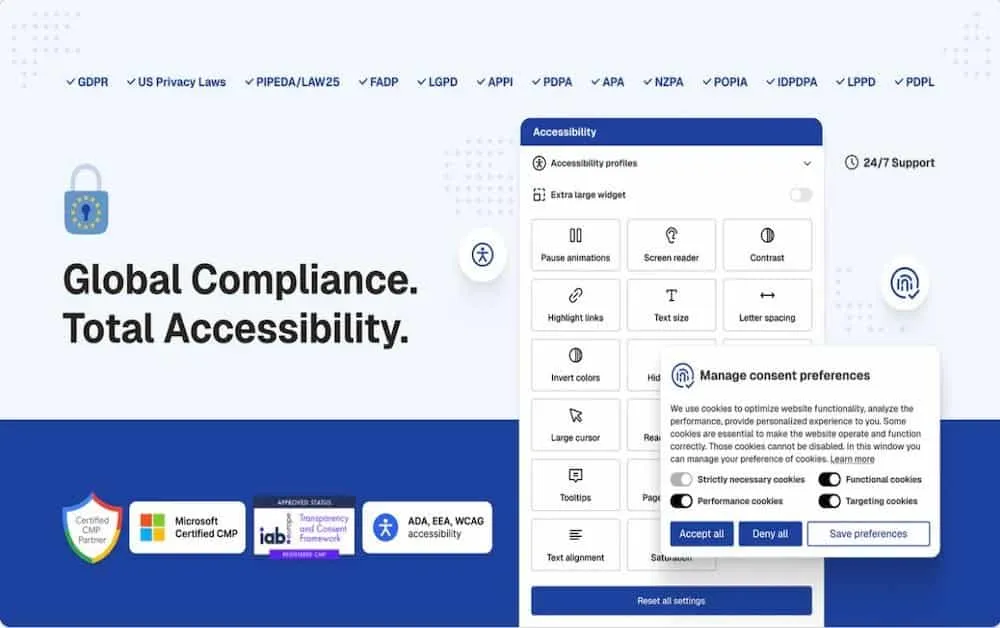
How Pandectes Helps Shopify Stores Manage Opt-Out and Opt-In Compliance
For Shopify merchants juggling multiple jurisdictions, Pandectes GDPR Compliance app serves as a purpose-built consent management and privacy compliance solution.
Configurable consent models: Pandectes supports both opt-in (GDPR/ePrivacy) and opt-out (CCPA/CPRA) consent banner configurations. Its geo-targeted cookie banner automatically adapts consent mechanisms to user location, showing an opt-in banner to EU visitors and opt-out notices to California residents without manual intervention.
Automated scanning and categorization: Pandectes runs automated store scanning to detect cookies, trackers, and third-party scripts. It categorizes them into Necessary, Analytics, Functional, and Advertising, ensuring you know exactly what user data each script collects. This supports your obligation to inform users about data processing activities and maintain accurate consent records.
Consent logging and audit readiness: Every consent and opt-out action is logged with timestamps, scope, and method-ready for regulatory inquiries and internal audits. When users withdraw consent, the change is recorded and can be propagated to downstream systems.
Integration with marketing tools: Pandectes coordinates consent signals with Google Analytics 4, Meta Pixel, TikTok, and other marketing tags. As a Google-certified CMP, it supports Google Consent Mode, passing explicit user consent signals (ad_storage, analytics_storage) to Google tags automatically. Multilingual banners and legal texts cover EU, UK, US, Brazil, and more, with support for multiple Shopify storefronts and Shopify Plus operations.
The practical benefit: merchants maintain compliant opt-out mechanisms for targeted advertising and data sharing while maximizing lawful data collection under different privacy laws through a single SaaS platform.
Conclusion
The real difference between opt-in and opt-out is not only legal but also ethical and strategic. How you handle consent shapes how customers perceive your brand-and whether they come back.
Compliance in 2026 means choosing the right consent mechanism per region and data type, providing genuine user control instead of dark patterns, and keeping reliable consent records that align with your systems. It means respecting user preferences as a business practice, not just a regulatory checkbox.
View consent not as a hurdle but as an opportunity to run privacy-led marketing that respects users while maintaining strong analytics and targeted advertising where lawful. Evaluate your existing consent banner, privacy policy, and opt-out mechanism against the checklist above.
If you’re a Shopify merchant looking to simplify this across jurisdictions, consider automating these tasks with a specialized CMP like Pandectes rather than building and maintaining a bespoke solution from scratch.
.C9MKzNUR_Aa9r5.webp)