Introduction
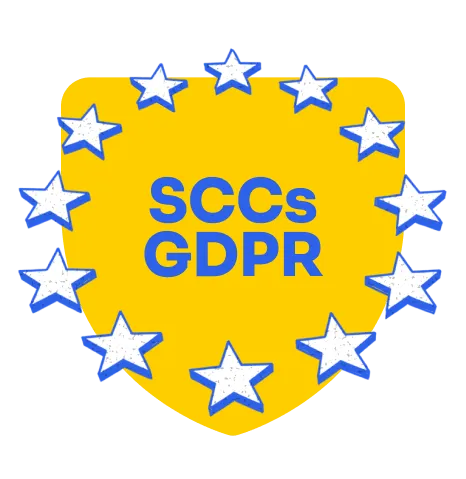
Under the General Data Protection Regulation (GDPR), organizations that engage in cross-border data flows must ensure that any transfer of personal data outside the European Economic Area (EEA) complies with strict data protection standards. One of the most widely used mechanisms to facilitate international data transfers is the use of standard contractual clauses SCCs.
Standard contractual clauses are pre-approved contractual provisions issued by the European Commission that allow businesses to legally transfer personal data from the European Union to third countries that do not benefit from an adequacy decision. These clauses are designed to ensure that EU personal data continues to receive a level of protection essentially equivalent to that guaranteed within the EU, even when it is processed abroad.
In practice, SCCs play a central role in enabling global business operations, especially for companies engaged in cloud computing services, cross-border e-commerce, and multi-jurisdictional data processing activities. They are a key tool for ensuring compliance with data protection laws while supporting the free flow of data in international markets.
 Pandectes GDPR ComplianceThe most popular & reviewed GDPR app for ShopifyInstall free on Shopify
What Are Standard Contractual Clauses?
Standard contractual clauses (also referred to as model contractual clauses or model clauses) are standardized legal terms adopted by the European Commission to safeguard personal data when it is transferred outside the European Economic Area. They function as a legally binding data transfer agreement between a data exporter (typically located in the EU) and a data importer (located in a third country).
These clauses require both parties to commit to specific data protection obligations, ensuring that processing personal data continues to meet EU-level data protection standards. This includes principles such as data minimization, purpose limitation, security, and respect for data subject rights.
SCCs are commonly integrated into broader data processing agreements (DPAs) and are especially relevant in scenarios involving cloud providers, SaaS platforms, marketing tools, and outsourced IT services. In essence, they provide a structured legal framework that helps protect personal data while enabling global data processing operations.
When Businesses Need SCCs for International Data Transfers
Businesses must implement SCCs whenever there is a restricted transfer of personal data from the EU or EEA to a third country that does not have an adequacy decision from the European Commission. These situations are referred to as international data transfers or cross-border data transfers.
Typical data transfer scenarios include controller-to-processor arrangements (for example, an EU company using a US-based cloud provider), processor-to-processor arrangements, or controller-to-controller transfers where both parties independently determine purposes of processing. In each case, SCCs may be required to ensure the lawful transfer of data.
The need for SCCs arises particularly when EU personal data is accessed or processed outside the EEA, even if the service provider has a global infrastructure. Businesses must evaluate whether data flows involve third countries and determine if additional safeguards are necessary under the regulatory framework of the GDPR.
Map Your International Data Transfers
Before implementing SCCs, organizations must first conduct a detailed mapping of their data flows. This involves identifying where personal data originates, where it is stored, who processes it, and whether any third countries are involved in the processing chain.
Mapping data flows is a critical compliance step because it helps identify all cross-border data flows and potential transfer risks. Businesses must assess both direct and indirect transfers, including subcontractors and sub-processors that may access or process personal data outside the EU.
This step also helps organizations determine the roles of both the data exporter and data importer, clarify processing activities, and ensure that all international data transfers are properly documented. Without accurate mapping, businesses risk overlooking hidden transfers that may require SCCs or other safeguards.

Choose the Right Transfer Mechanism and SCC Module
Once data flows are identified, businesses must choose the appropriate legal mechanism to facilitate international data transfers. While SCCs are the most common solution, they are not the only option under the GDPR.
Organizations may rely on adequacy decisions where the European Commission has determined that a third country ensures adequate protection. Alternatively, they may use binding corporate rules or, in limited cases, derogations for specific situations. However, SCCs remain the primary mechanism for lawful transfers when no adequacy decision exists.
Modern EU standard contractual clauses are modular, meaning they can be adapted depending on the relationship between the parties involved in data processing.
SCC Modules Explained
The current SCC framework includes different modules designed for specific data transfer scenarios:
- Controller-to-controller transfers
- Controller-to-processor transfers
- Processor-to-processor transfers
- Processor-to-controller transfers
Each module defines tailored obligations for both the data exporter and data importer, ensuring that data protection obligations are appropriately allocated depending on the structure of the relationship.
This modular approach reflects the complexity of modern data processing ecosystems, especially in cloud-based and multi-vendor environments.
Make Your Shopify Store GDPR & Cookie Compliant in Minutes
Start Free on ShopifyAdequacy Decisions
An adequacy decision is a determination by the European Commission that a third country provides an adequate level of data protection. When such a decision exists, personal data can flow freely without additional safeguards like SCCs.
Adequacy decisions significantly simplify compliance efforts because they remove the need for contractual safeguards or supplementary measures. However, only a limited number of countries currently benefit from this status.
In the absence of adequacy, organizations must rely on SCCs or other lawful transfer mechanisms to ensure adequate protection for personal data.
Derogations
Derogations are limited exceptions provided under the General Data Protection Regulation (GDPR) that permit certain data transfers in specific situations. These situations include scenarios where explicit consent has been given by the data subject, when the transfer is necessary for the performance of a contract, or for reasons of important public interest. Despite their usefulness, derogations are interpreted narrowly by regulators and do not serve as a standard mechanism for transferring data. They cannot be relied upon for systematic, repeated, or ongoing data transfers across borders, and businesses are advised to explore more robust legal mechanisms to ensure compliant international data flow.
Binding Corporate Rules
Binding corporate rules (BCRs) are comprehensive internal policies that multinational organizations adopt to govern and regulate the transfer of personal data across different countries within their corporate group. These rules are meticulously designed to ensure that data is protected consistently and effectively throughout all member entities, regardless of jurisdiction. They undergo a rigorous approval process and must receive formal endorsement from relevant data protection authorities, which validates their adherence to legal and regulatory standards. BCRs serve as a cornerstone for large enterprises with extensive global operations, providing a legally recognized framework that facilitates international data transfers while maintaining high levels of privacy and security.
Although they are highly effective in safeguarding data and ensuring compliance, implementing BCRs can be a complex and time-consuming process that requires significant regulatory approval, making them more suitable for large organizations with the resources and expertise to manage such procedures. For many organizations, especially those with less complex international data transfer needs, standard contractual clauses (SCCs) often present a more practical and accessible solution for ensuring compliance with data protection laws across borders.
Conduct Transfer Impact Assessments (TIAs)
Before relying on SCCs, organizations must conduct transfer impact assessments (TIAs). These assessments evaluate whether the legal framework in the destination country may affect the effectiveness of SCCs.
Businesses must assess risks such as government access requests, surveillance laws, and whether data protection safeguards can be effectively implemented in practice. The goal is to determine whether adequate protection can be ensured despite foreign legal environments.
TIAs are now a critical part of GDPR compliance and are required to demonstrate accountability in international data transfers.
Implement Supplementary Measures
When SCCs alone are not sufficient, organizations must implement supplementary measures to ensure adequate protection of personal data. These measures strengthen the contractual safeguards provided by SCCs.
- Technical safeguards: Technical measures include encryption, pseudonymization, and secure key management systems. These tools help ensure that even if data is accessed unlawfully, it remains unintelligible.
- Contractual safeguards: Contractual safeguards include additional clauses that restrict access, define strict processing instructions, and impose transparency obligations on data importers.
- Organizational safeguards: Organizational measures include internal policies, staff training, access controls, and governance frameworks that ensure consistent compliance with data protection standards.
Together, these measures help ensure compliance when SCCs alone are not sufficient due to legal or technical risks in third countries.
How to Implement SCCs in Contracts
Implementing Standard Contractual Clauses (SCCs) necessitates meticulous and precise contract drafting, as well as thorough integration into the pre-existing data processing agreements and data transfer agreements that organizations have in place. To facilitate this process, organizations are required to complete detailed annexes that specify various critical aspects such as the categories of data involved, the data subjects whose data is being processed, the purposes for which the data is being processed, and the security measures implemented to protect the data.
These annexes are indispensable because they serve as essential documentation that clearly defines the scope and boundaries of the data processing relationship, ensuring all parties have a shared understanding of their respective roles and responsibilities. Once these annexes are completed with all the necessary information, both the data exporter, who is transferring the data, and the data importer, who is receiving it, must then formally execute the SCCs.
This execution signifies their agreement to abide by the stipulated contractual provisions, and it is crucial that the SCCs are properly incorporated into binding contractual arrangements to ensure compliance with applicable data protection regulations and to provide a clear legal framework for data transfer activities.
New SCCs vs Old SCCs: Key Differences
The updated EU standard contractual clauses introduced a modular structure and expanded obligations compared to older versions. They now explicitly address modern data processing scenarios such as cloud computing and multi-layered vendor relationships.
Unlike older model clauses, the current SCCs incorporate requirements for supplementary measures and transfer impact assessments, reflecting the GDPR’s enhanced accountability framework.
Older SCCs can no longer be used for new contracts and have been fully replaced by the updated version, which is now the only valid mechanism for contractual data transfers.
Common SCC Compliance Mistakes to Avoid
One of the most common mistakes businesses make is assuming that signing SCCs alone is sufficient for compliance. In reality, SCCs must be supported by transfer impact assessments and, where necessary, supplementary measures.
Another frequent issue is incomplete documentation, particularly missing annexes or unclear definitions of data processing activities. Businesses also often fail to monitor data importers or update SCCs when data processing arrangements change.
Avoiding these mistakes is essential to ensure compliance with the GDPR and to maintain lawful international data transfers.
A Google-Approved Consent Platform for Shopify
Pandectes is an official Google Certified Consent Management Platform and is fully compatible with Google Consent Mode v2 and global privacy regulations.
View the App on ShopifyPractical Steps for Shopify Stores Using Pandectes
Shopify merchants face unique transfer risks because third-party apps frequently introduce hidden international transfers. Store owners should review:
- Apps
- Themes
- Pixels
- Marketing tools
- Payment integrations
- Customer service platforms
Pandectes can help merchants improve visibility by managing consent collection, maintaining consent logs, and identifying third-party tracking technologies that may affect compliance obligations. Merchants should also review vendor contracts annually, conduct TIAs where required, and continuously monitor changes in their vendor ecosystem.
Conclusion
Standard contractual clauses remain one of the most important legal mechanisms for enabling international data transfers under the GDPR. They provide a structured framework that allows businesses to transfer personal data lawfully while maintaining strong data protection standards.
However, SCCs are not a standalone solution. Effective compliance requires a combination of data mapping, transfer impact assessments, supplementary measures, and ongoing monitoring of data processing activities. By properly implementing SCCs and related safeguards, organizations can ensure lawful, secure, and transparent cross-border data flows while protecting the rights of data subjects across multiple jurisdictions.