
9 minutes read

Understanding Data Clean Rooms vs. Consent Management Platforms

Understanding Data Clean Rooms vs. Consent Management Platforms

Table of Contents

Introduction

Organizations must balance the need to analyze customer data, drive strategic insights, and comply with strict data privacy regulations. As privacy laws evolve and the industry shifts away from traditional data collection methods like third-party cookies, protecting consumer data has become increasingly important. Two critical technologies at the forefront of this balancing act are data clean rooms and consent management platforms (CMPs).

While these solutions both serve the goal of respecting user privacy and maintaining regulatory compliance, they do so in very different ways and serve distinct roles in a modern data strategy. This article explores their core principles, how they function, and why understanding the difference is essential for businesses that aim to extract value from data while ensuring compliance with global privacy laws.

Data Collaboration

At the heart of modern business growth is data collaboration, the ability to bring together disparate customer databases, sales metrics, engagement signals, and other datasets to gain valuable insights. However, unmanaged data sharing often risks exposing sensitive data, including personally identifiable information (PII) or user-level data, potentially violating privacy rules and eroding trust.

Data clean rooms provide a secure environment where this collaboration can happen without exposing raw data or sensitive information. They create a secure data sharing environment where organizations contribute encrypted or anonymized inputs, enabling data analysis and secure collaboration on combined datasets. In this context, data collection must be conducted in compliance with privacy regulations, making it essential to obtain user consent through Consent Management Platforms (CMPs) before any data is shared or processed. Unlike traditional data-sharing approaches, clean rooms are built from the ground up with privacy in mind, enabling data collaboration while ensuring that only aggregated data, such as aggregated insights or approved analytics outputs, can leave the system, and sensitive information remains protected.

For businesses striving to make informed decisions about marketing campaigns, customer behavior trends, or measuring campaign performance, secure data collaboration via clean rooms has become indispensable. At the same time, a foundational aspect of any compliant data setup is to obtain explicit user consent, the precise area where consent management platforms play a crucial role. CMPs ensure that the data feeding into tools like clean rooms is collected and processed lawfully by capturing and managing user consent preferences. Consent management ensures that only data for which users have given explicit consent can be processed in a data clean room.

While both technologies support privacy and data compliance, they serve distinct functions: one governs how data enters and flows through digital systems with user permission, and the other governs how that data is analyzed collaboratively in a privacy-preserving environment. Together, they form pillars of responsible data handling and help businesses leverage data without legal or ethical risk.

A Google-Approved Consent Platform for Shopify
Pandectes is an official Google Certified Consent Management Platform and is fully compatible with Google Consent Mode v2 and global privacy regulations.

History and Evolution of Clean Rooms

The concept of the data clean room has its roots in the 1990s, when the term β€œclean room” was first used to describe secure environments for software development and testing. As the digital landscape evolved and the volume of customer data grew, so did concerns about data privacy and the risks associated with data sharing. The introduction of stringent data privacy regulations, such as the GDPR and CCPA, marked a turning point. Organizations needed new ways to collaborate on data without violating privacy laws or exposing sensitive information.

In response, the data clean room emerged as a solution purpose-built for secure data collaboration. Unlike traditional data-sharing methods, clean rooms provide a secure environment where multiple parties can analyze data together while ensuring compliance with privacy regulations. This evolution has enabled businesses to leverage data for valuable insights and revenue growth, all while maintaining strict data privacy standards. Today, data clean rooms are a cornerstone of privacy-first data strategies, helping organizations navigate the complexities of data privacy regulations and extract maximum value from their data assets.

City

What is a Data Clean Room?

A data clean room is a secure collaboration environment specifically engineered to allow multiple parties to analyze data collaboratively without exposing raw or sensitive elements like PII. Imagine a controlled vault where encrypted datasets from different data owners are made available for examination, but only in aggregated, privacy‑protected formats: that’s the essence of a data clean room.

A data clean room ensures:

  • Strong data privacy: Sensitive and personally identifiable information never leaves the secure environment, and queries are controlled to prevent re‑identification.
  • Authorized access only: Only trusted users who meet governance and compliance policies can query or analyze the cleaned data.
  • Robust data governance practices: Permissions, audit trails, and privacy‑enhancing technologies ensure all actions within the platform comply with data privacy laws and internal rules.

The typical workflow involves several steps. First, the data provider (the entity uploading data) uploads their encrypted or tokenized datasets into the clean room. Next, other approved parties can contribute their own data, and the platform applies strict privacy controls and access permissions. Finally, participants can run queries or perform analysis on the combined data, but only receive aggregated, non-identifiable results.

Data clean rooms are purpose‑built to support secure collaboration, especially when organizations want to combine first‑party data with additional datasets, for example, from partners or publishers, in order to uncover customer behavior insights, perform audience overlap analysis, or measure the effectiveness of advertising campaigns without exposing underlying raw data. Analyzing combined data from multiple sources in this way enables deeper insights while maintaining privacy and compliance.

Data clean rooms can also be set up by individual organizations for internal data sharing and analysis, tailored to their specific needs and requirements. This flexibility allows businesses to maintain strict privacy controls while enabling valuable data-driven decision-making.

How Data Clean Rooms Work

In a typical clean room workflow:

  1. Data providers upload their data, usually already pseudonymized or encrypted, into the clean room. These may include CRM exports, purchase histories, customer data platform (CDP) data, or third-party data.
  2. A matching process ensures datasets align on agreed identifiers (without exposing actual PII).
  3. Analysts run pre‑approved queries or analytics models that return aggregated insights like trends, segments, or performance metrics.
  4. Only results that meet privacy thresholds can be extracted; raw or sensitive information remains protected within the clean room.

This approach ensures that sensitive data, such as consumer preferences or details about individuals, is never directly disclosed to collaborators. Only privacy‑safe summaries or analytics outputs are retrieved, enabling teams to gain actionable insights while respecting consent and legal boundaries.

For example, data clean rooms enable secure data analysis between labs and healthcare facilities, allowing them to collaborate on research or diagnostics without exposing sensitive patient information.

Make Your Shopify Store GDPR & Cookie Compliant in Minutes
Automatically manage cookie consent, block tracking before user approval, and stay compliant with GDPR, CCPA, LGPD, UK GDPR and Google Consent Mode v2 β€” without coding.

Key Advantages of Data Clean Rooms

Data clean rooms provide several advantages that make them attractive in a privacy‑first world:

  • Privacy‑preserving analytics: Organizations can analyze combined datasets from multiple sources without risking exposure of sensitive information.
  • Compliance with data privacy regulations: Built‑in governance features help maintain adherence to laws like GDPR and CCPA, reducing compliance burden.
  • Secure collaboration with external partners: Clean rooms enable secure digital collaboration on projects involving multiple stakeholders, such as cross‑company campaign analysis.
  • Enabling data collaboration: Data clean rooms create a secure environment for multiple parties to share and analyze sensitive data, facilitating benefits like targeted advertising and performance measurement.
  • Protection against data leakage: Advanced features like encryption and role‑based access controls help prevent unauthorized access and mitigate data leakage risks.

Data clean rooms provide a secure environment for brands to collaborate on data with retailers, leading to improved customer engagement and revenue growth. From identifying trends and segments to analyzing exposure data and overall campaign performance, data clean rooms empower analytics teams while maintaining data privacy standards at every stage.

Use Cases for Data Clean Rooms

Data clean rooms have become essential tools across a variety of industries, enabling organizations to collaborate on data while maintaining data privacy and compliance. Some of the most impactful use cases include:

  • Marketing and Advertising: Marketers use data clean rooms to analyze customer behavior, measure campaign performance, and optimize marketing campaigns, all without exposing sensitive customer data. This allows for more effective targeting and improved ROI while maintaining data privacy.
  • Healthcare: In healthcare, data clean rooms facilitate secure collaboration on sensitive patient data. Organizations can gain insights into patient behavior, identify trends, and develop targeted treatments, all while ensuring that patient data remains protected and compliant with privacy regulations.
  • Finance: Financial institutions leverage data clean rooms to detect fraud, enhance credit scoring models, and develop personalized financial products. By enabling secure collaboration, they can gain insights without compromising customer data privacy.
  • Customer Segmentation: Businesses combine customer data from multiple sources within a clean room to create more accurate customer segments. This enables highly targeted marketing campaigns and improved customer engagement, all while maintaining data privacy.
  • Supply Chain Optimization: Data clean rooms enable manufacturers, suppliers, and logistics providers to collaborate securely, optimizing supply chain operations and improving efficiency through shared insights, without risking exposure of sensitive business data.

By enabling secure collaboration and advanced analytics, data clean rooms empower organizations to gain insights, identify trends, and drive better outcomes while upholding the highest standards of data privacy.

data

Data Clean Rooms in Customer Data Management

Customer data management involves collecting, storing, organizing, and analyzing all information that a business holds about its customers, whether it’s transaction records, engagement history, user preferences, support interactions, or consumer data. For many companies, this data is stored in a customer data platform (CDP), which consolidates multiple data streams into a unified customer view.

Data clean rooms can complement CDPs by enabling organizations to securely analyze enriched customer datasets, combining first‑party data from the CDP with partner or industry data as combined data, without ever exposing raw PII or violating consent conditions.

These privacy-preserving environments allow for analytics on aggregated data, ensuring that insights and trends can be identified without compromising individual privacy.

Retailers use data clean rooms to share anonymized and aggregated shopper data with brands and advertisers. This enables improved targeting and advertising performance while maintaining compliance with privacy regulations.

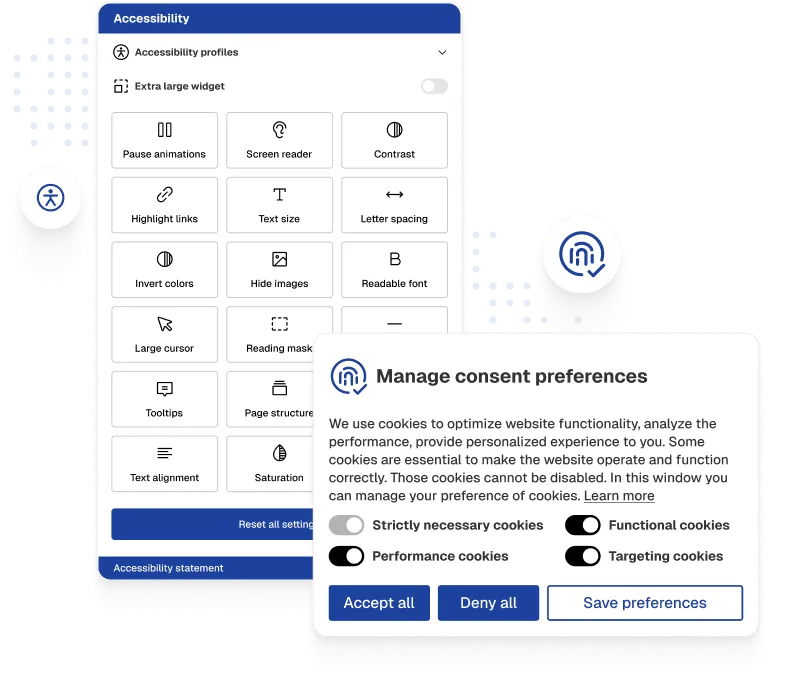
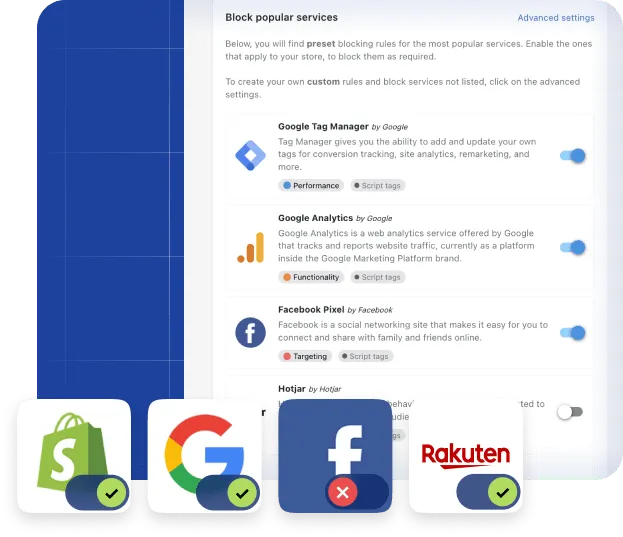
While data clean rooms focus on how data is analyzed securely, consent management platforms focus on how data is collected lawfully in the first place. A CMP is a software solution that ensures organizations collect and manage explicit user consent before processing or using personal data, especially when that data will be used for tracking, analytics, or personalized experiences. CMPs govern the data collection process and act as a gatekeeper, blocking tracking scripts until user consent is granted. Obtaining explicit user consent is crucial to comply with privacy regulations and to ensure that data collection is transparent and lawful.

Consent is a legal necessity under numerous data privacy regulations, including the General Data Protection Regulation (GDPR) in Europe, the California Consumer Privacy Act (CCPA), and other global laws. A modern CMP enables businesses to obtain, document, and honor users’ consent preferences, ensuring that only data backed by explicit consent is allowed into data workflows or analytical environments. Additionally, CMPs maintain legally required logs of when and how consent was granted for regulatory reporting.

A CMP typically provides the following capabilities:

  • Consent collection: Presents users with clear options about what data they agree to have collected or shared.
  • Preference management: Stores and updates user choices so that preferences can be honored across systems.
  • Audit trails: Maintains detailed records of consent decisions, which are essential for regulatory audits and compliance proof.
  • Cross‑system integration: Communicates consent status to analytics tools, customer data platforms, and other downstream systems.

Before any customer data enters a clean room or other analytical tools, it must typically have been collected with valid consent, a foundation enabled by the CMP. Without documented consent, organizations risk non‑compliance with privacy laws and potential regulatory penalties.

In essence, CMPs protect user autonomy over their data while establishing a trusted foundation for all further data usage and collaboration.

Conclusion

Understanding the distinction between data clean rooms and consent management platforms is essential for any organization that relies on data to make decisions. Clean rooms enable secure, governed collaboration on combined datasets, offering advanced analytical capabilities through the use of aggregated data, which provides comprehensive audience insights and trend identification without compromising individual privacy. CMPs ensure that the data feeding into these environments is collected only after organizations obtain explicit user consent, as required by global privacy regulations and evolving legal standards.

Together, these technologies form the backbone of a responsible and forward‑looking data strategy, allowing businesses to extract valuable insights from customer data, respect user privacy preferences, and ensure compliance across all facets of data usage. By integrating both clean rooms and consent management into data governance practices, companies can foster trust, minimize regulatory risk, and extract maximum value from their data assets, all within a secure, compliant digital environment.

By combining a privacy-first approach through data clean rooms with effective consent management via tools like Pandectes GDPR Compliance, organizations can extract valuable insights while maintaining full data privacy compliance.

Make Your Shopify Store Fully GDPR & CCPA Compliant Today
Pandectes GDPR Compliance App for Shopify
Share
Subscribe to learn more
pandectes