Introduction
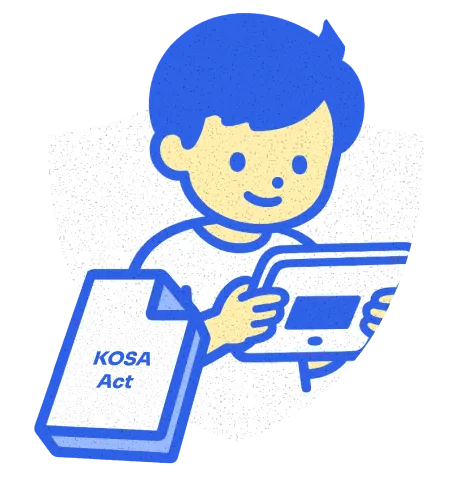
The Kids Online Safety Act (KOSA) is one of the most significant proposed shifts in U.S. digital regulation aimed at kids’ online safety, with direct implications for age verification requirements across online platforms and social media companies. At its core, the legislation introduces a framework that would push platforms to take a more active role in protecting young users from harmful content, while also reshaping how users’ age is determined, processed, and enforced online.
For businesses, especially e-commerce operators, SaaS providers, and social platforms, the urgency is real. If enacted in its current or similar form, KOSA would require companies to rethink age verification technologies, redesign onboarding flows, and reassess how they manage personal data, parental controls, and content delivery. This is not only a compliance issue but also a product design challenge tied to the Online Safety Act principles and increasing regulatory expectations around protecting minors.
The scope of KOSA is broad. It touches on mental health risks, addictive product features, sexual exploitation, and exposure to harmful material, while also raising concerns from civil liberties groups like the Electronic Frontier Foundation regarding free speech, protected speech, and overreach in content moderation. Understanding these dynamics is essential for any organization operating digital services that could be accessed by minors.
Legislative Landscape For Kids Online Safety Act And Age Verification
The Kids’ Online Safety Act sits within a broader global trend of tightening rules on online age verification and platform accountability. In the United States, momentum is building around federal and state-level approaches that increasingly expect platforms to take responsibility for verifying and protecting young people online.
At the federal level, KOSA is part of a growing push to regulate covered platforms, including social media, gaming, and video-sharing services, by imposing a duty of care standard. This reflects a shift in which platforms may be held liable if they fail to mitigate foreseeable harms such as suicidal behaviors, eating disorders, or substance abuse risks linked to algorithmic design and recommendation systems. Recent legislative summaries also highlight the role of the Federal Trade Commission and state attorneys general in enforcing these obligations and shaping the broader regulatory framework.
Internationally, similar movements are emerging in the EU, UK, and Australia, where governments are exploring stricter age verification requirements and platform accountability rules. These parallels are influencing U.S. debates, especially around whether identity-based verification or device-level systems are more appropriate for balancing online safety with user privacy and free speech.
State-Level Kids Online Safety And Age Verification Trends
Across the United States, states are increasingly experimenting with their own versions of age verification laws, often targeting social media platforms and sites hosting mature or sensitive content. States such as Texas and others have already introduced or implemented frameworks requiring platforms to restrict underage access or implement stronger identity-based controls.
Many of these laws include variations in enforcement mechanisms, including legal liability, fines, or, in some cases, criminal penalties for non-compliance. Some also introduce private right of action provisions, allowing individuals or parents to sue platforms directly for failing to protect minors. This fragmented landscape creates compliance complexity for tech companies operating across multiple jurisdictions.
Another emerging trend is litigation risk. Privacy advocates and industry groups are closely monitoring lawsuits tied to age-gating requirements and data collection practices. Businesses are increasingly advised to track pending legislation and court decisions involving state attorneys general, as these rulings may shape how federal rules like KOSA are ultimately interpreted and enforced.
KOSA, Bipartisan Support, And Key Provisions
One of the defining features of KOSA is its strong bipartisan support, which has helped it advance further than many other internet regulation proposals. The bill has been repeatedly backed by lawmakers, including Senator Richard Blumenthal, reflecting shared concerns across political lines about protecting minors from harmful behaviors online.
The legislation has moved through various congressional stages, including Senate approval in prior versions with overwhelming votes, demonstrating rare consensus in a highly polarized environment. At the same time, House revisions and related packages continue to evolve, with ongoing debate about how far platforms should go in implementing age verification, algorithmic restrictions, and parental oversight tools.
Key provisions under discussion include mandatory safety measures for covered platforms, increased transparency obligations, and requirements to offer parental tools such as content filtering and account management features. Analysts and compliance professionals are increasingly recommending that organizations monitor federal bill trackers and regulatory updates, as changes to KOSA’s structure could significantly impact digital product design and compliance obligations.

KOSA Key Provisions And Duty Of Care Under The Online Safety Act
At the center of KOSA is the duty of care requirement, which would obligate platforms to take reasonable steps to prevent harm to minors. This includes mitigating exposure to harmful content, reducing risks associated with addictive product features, and addressing systemic risks tied to recommendation algorithms.
The bill also emphasizes platform responsibility for implementing safeguards related to mental health, including risks linked to self-harm, substance use disorders, and content that may encourage unhealthy behaviors. Platforms may be required to adjust default settings, reduce algorithmic amplification of harmful content, and provide safer onboarding experiences for young users.
In addition, KOSA introduces expectations around parental controls, including visibility into account settings and the ability to manage or delete accounts belonging to minors. Independent audits and transparency reporting are also key components, requiring platforms to demonstrate compliance with safety obligations through third-party review mechanisms. These audits may include evaluations of internal systems, recommendation logic, and data flows involving minors, increasing operational scrutiny across product teams.
Age Verification Methods And Identity Verification Risks
To comply with emerging age verification requirements, platforms may adopt several methods, including ID-based verification, facial age estimation, credit card checks, or third-party identity providers. Each approach introduces different levels of friction and risk.
One major concern is privacy. Collecting government IDs or biometric data significantly increases exposure to identity theft, data breaches, and misuse of sensitive information. This creates tension between improving online safety and preserving user privacy, especially for young users and vulnerable groups.
There is also growing discussion about device-level or operating system-based age verification. While potentially less invasive at the platform level, these approaches raise concerns about centralized tracking and whether systems could reliably determine a user’s age without over-collection of personal data. Additionally, data retention risks remain a major issue, as identity verification systems often require temporary storage of highly sensitive information.
Impact On Online Platforms And Kids Online Services
If implemented broadly, KOSA would significantly expand compliance obligations for online platforms and digital services used by minors. Companies would need to reassess onboarding flows, content moderation systems, and algorithmic recommendations to ensure alignment with kids’ online safety expectations.
One of the most notable impacts would be product redesign. Platforms may need to disable or limit addictive product features, such as infinite scroll, autoplay, or highly personalized feeds, for minors. This would fundamentally change how engagement is engineered and measured across social media and content platforms.
Operationally, the costs of implementing age verification technologies, conducting audits, and maintaining compliance frameworks could be substantial. Smaller platforms may face disproportionate burdens, while larger social media companies would need to invest heavily in compliance infrastructure, legal oversight, and engineering adjustments to meet evolving regulatory expectations.
Implications For Shopify Stores And Pandectes Compliance Tools
For ecommerce businesses, KOSA introduces new considerations around how personal data is collected and processed when minors may access online stores. Even if a store is not directly targeting children, underage access can trigger compliance obligations under broader safety frameworks.
One key area is consent management. Stores may need to update cookie banners and privacy flows to account for age-differentiated experiences, ensuring that parental consent mechanisms are properly integrated where required. Privacy policies may also need to explicitly address age-related processing and data handling practices.
In addition, businesses should map all data flows involving third-party identity verification providers. This includes ensuring secure handling of verification data and aligning with privacy regulations such as GDPR principles. Compatibility with consent frameworks like Google Consent Mode may also become critical for maintaining compliant analytics and tracking systems.
A Google-Approved Consent Platform for Shopify
Pandectes is an official Google Certified Consent Management Platform and is fully compatible with Google Consent Mode v2 and global privacy regulations.
View the App on ShopifyFree Speech Risks Under Age Verification Rules
A major area of debate surrounding KOSA involves potential impacts on free speech and protected speech. Civil liberties organizations have warned that vague definitions of harmful material could lead to over-censorship by platforms attempting to avoid legal liability.
The concern is that platforms may overcorrect, restricting legitimate discussions about sensitive topics such as mental health, sexuality, or identity, including content related to LGBTQ content, due to fear of enforcement risk. Critics argue that this could have a chilling effect on expression and limit access to information for both minors and adults.
Balancing safety and expression remains a core challenge. Any compliance strategy must consider not only legal obligations but also constitutional considerations tied to the First Amendment, ensuring that safety measures do not unintentionally suppress lawful discourse.

Identity Verification Solutions For Online Age Verification Compliance
As regulatory pressure increases, a growing ecosystem of identity verification solutions is emerging to support compliance with online age verification rules. These include tokenized verification systems, privacy-preserving age estimation tools, and third-party identity platforms.
A key requirement for businesses is data minimization. Solutions should avoid storing raw identity documents wherever possible and instead rely on verifiable age tokens or anonymized confirmation signals. This reduces exposure to breaches and aligns with modern privacy principles.
Enterprise buyers are also expected to evaluate vendor compliance, including SOC 2 certification and GDPR alignment. Independent audits of verification providers may become a standard requirement, particularly for platforms handling large volumes of young users or sensitive data.
Choosing Privacy-Preserving Age Verification For E-commerce And GDPR
For e-commerce and digital services, the most sustainable approach to age verification is often a privacy-first design. Token-based systems that confirm age without storing identity data offer a more secure alternative to traditional ID uploads.
These systems help reduce the risk of identity theft, while still supporting compliance with age verification requirements under evolving legal frameworks. They also allow platforms to maintain user trust while meeting regulatory expectations around kids’ online safety.
Where possible, platforms should integrate parental consent workflows for underage users and ensure that privacy defaults are aligned with global standards such as GDPR. This creates a more resilient compliance posture across jurisdictions.
Make Your Shopify Store GDPR & Cookie Compliant in Minutes
Start Free on ShopifyImplementation Roadmap For Businesses
A structured implementation approach is essential for preparing for KOSA-like obligations. Businesses should begin with a regulatory gap analysis to identify where current systems fall short of emerging online safety act requirements.
Next, companies should design age-differentiated user experiences, ensuring that minors are routed through safer defaults with restricted features. Pilot testing age verification flows with segmented user groups can help identify friction points and compliance gaps before full deployment.
Organizations should also prepare incident response plans for potential verification breaches, including notification procedures and remediation steps. Documentation of all compliance actions will be critical for audits and regulatory reviews.
Monitoring, Enforcement, And Litigation Risks
Businesses should actively monitor developments in both federal and state-level legislation, as enforcement approaches may vary significantly. New rulings could reshape how age verification requirements are interpreted and enforced across jurisdictions.
Given the sensitivity of identity and age data, organizations should also preserve evidence of compliance in case of private litigation or enforcement actions. This includes maintaining audit logs, policy documentation, and technical implementation records.
Regular third-party audits are recommended to ensure ongoing compliance with evolving kids online safety act expectations and broader online safety regulations.
Conclusion
The future of the Kids Online Safety Act and related age verification laws will depend on finding a careful balance between protecting minors and preserving fundamental digital rights. Policymakers should prioritize privacy-first age verification standards that minimize data collection while still improving online safety outcomes.
Clear definitions of harm are essential to avoid unintended consequences for free speech and lawful content. Without precise language, platforms may over-censor to reduce legal risk, limiting access to important information for both minors and adults.
Ultimately, a more effective approach may involve bipartisan technical studies and evidence-based standards before imposing broad mandates. By combining regulatory clarity with privacy-preserving technology, it is possible to create safer online environments without undermining trust in digital ecosystems or restricting lawful expression.