
Introduction
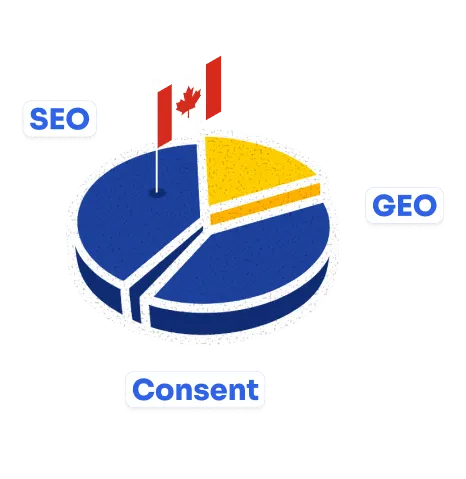
In Canada’s evolving digital economy, the nexus between search engine optimization (SEO), generative engine optimization (GEO), and privacy compliance is no longer an abstract regulatory concern; it’s a core component of website performance and online visibility. As search engines and AI tools increasingly dominate online search behavior, Canadian organizations must balance traditional SEO with newer generative AI engines and AI-driven search engines while aligning with consent and privacy norms embedded in federal and provincial laws. AI-generated results, such as those from ChatGPT and Google AI Overviews, are now a primary source of information online, prompting businesses to adapt their content strategies for greater visibility. AI models have become essential tools in digital content strategy, content creation, and understanding search engine behavior. This includes safeguarding personal information, navigating data practices, and making consent an ongoing process that protects users and enhances user interactions.
The digital ecosystem today is shaped by dynamic search queries, AI-powered assistants, voice search, and conversational queries that elevate organic traffic beyond simple page ranking. People search across multiple platforms and formats, including social media and AI interfaces, rather than relying solely on traditional search engines. These trends place new emphasis on structured data, site performance (including Core Web Vitals), and sophisticated content designed for both humans and AI systems. At the same time, federal and provincial legal frameworks governing consent collection, explicit consent, and data governance create regulatory requirements that drive how digital marketing, analytics tools, and interactive tools engage users and collect data. Understanding the key differences between SEO, GEO, and privacy frameworks is crucial for Canadian businesses. Privacy challenges remain a central issue that organizations must navigate to ensure compliance and maintain user trust. Understanding this regulatory landscape is a key point for any Canadian business that wants to compete effectively while ensuring privacy compliance.
Canada’s Privacy Framework and Why It Matters for SEO
Canada’s private-sector privacy landscape is built primarily on PIPEDA at the federal level and strengthened by provincial laws such as Quebec’s Law 25. These laws regulate how private sector organizations collect, use, and disclose personal information in commercial activities.
Personal information includes obvious identifiers like names and email addresses, but it also extends to any data that can be linked to an identifiable individual, such as IP addresses, browsing behavior, location data, and analytics identifiers. Sensitive categories like political opinions and sexual orientation are specifically protected under privacy laws and require special consent. In other words, much of what fuels modern digital marketing falls within privacy regulation.
Canadian privacy commissioners restrict the use of high-precision tracking for sensitive locations without explicit consent. Privacy regulations also restrict the collection of precise location data, necessitating broader, less granular geographical targeting.
That has direct implications for:
- Analytics implementation
- Cookie tracking
- Retargeting campaigns
- Personalization engines
- AI-powered tools
The data collected, including cookies and analytics tools, must be transparently disclosed to users. Under PIPEDA, implied consent may be valid for certain online activities like behavioral advertising and analytics, but organizations must ensure users are clearly informed and understand what they are consenting to.
If data collection is not properly disclosed and consented to, organizations face regulatory exposure. Express consent, particularly for sensitive data, must be an active act by the user, and prior consent mechanisms like pre-checked boxes are prohibited. But beyond that, they risk damaging user trust, and trust is increasingly tied to digital performance.
When users feel misled or overwhelmed by invasive tracking, they bounce. When bounce rates rise and engagement drops, search performance follows.
Privacy compliance, therefore, is not just about avoiding fines. It is about protecting user satisfaction signals that search engines rely on and taking steps to ensure compliance with privacy standards to build trust and avoid regulatory risk.

Make Your Shopify Store GDPR & Cookie Compliant in Minutes
Start Free on ShopifyData Collection, Cookies, and Performance Optimization
Modern websites rely on multiple layers of tracking technologies. Cookies, advertising pixels, analytics tools, heatmaps, and embedded third-party scripts all collect information about user behavior. Technical SEO is a key part of optimizing site performance and ensuring compliance with privacy regulations, especially as search engines and platforms evolve.
However, every additional script affects:
- Page load speed
- Visual stability
- Interactivity
- Crawl efficiency
Search engines evaluate these performance factors through metrics often referred to as Core Web Vitals. One important metric, cumulative layout shift, measures visual stability during page loading and navigation by tracking unexpected element movements that can negatively impact user experience. When websites load slowly or shift unexpectedly due to late-loading scripts, rankings can suffer. These elements directly impact the site’s visibility in search engine rankings.
A privacy-first approach actually improves technical performance. Compliance with Canadian privacy laws necessitates the use of cookie consent banners, which can negatively affect user experience metrics such as bounce rate.
By categorizing cookies into essential and non-essential groups and delaying non-essential scripts until consent is given, organizations can:
- Reduce unnecessary data transfers
- Improve mobile load times
- Minimize layout shifts
- Protect the primary content experience
The implementation of Consent Management Platforms (CMPs) can increase page load times and alter user interaction, potentially raising bounce rates. Heavy consent management platforms may negatively impact ranking factors like Core Web Vitals due to increased load times.
This approach strengthens both compliance and search performance. CMPs are essential for organizations to comply with privacy regulations like GDPR and PIPEDA.
Instead of viewing consent management platforms as technical obstacles, businesses should see them as optimization tools that streamline script governance and reduce digital clutter. CMPs enhance user trust by providing transparency about data collection and usage practices. Using a CMP allows organizations to document their consent practices, which is crucial for audits and compliance checks. Organizations must ensure that their cookie banners provide users with clear choices regarding their data consent to comply with privacy laws. The implementation of privacy compliance measures can lead to improved website performance, such as faster loading times and reduced bounce rates.
A Google-Approved Consent Platform for Shopify
Pandectes is an official Google Certified Consent Management Platform and is fully compatible with Google Consent Mode v2 and global privacy regulations.
View the App on ShopifyThe Rise of Generative Search and GEO
Generative AI systems now deliver synthesized answers directly within search interfaces. Users increasingly receive summarized explanations rather than navigating multiple websites. AI-generated results, such as those from ChatGPT and Google AI Overviews, are now a primary way users receive information online, making visibility in these results essential for businesses.
This shift introduces the concept of generative engine optimization (GEO). Generative Engine Optimization is becoming critical for businesses to increase visibility in AI-generated answers and summaries.
GEO focuses on structuring content so that AI systems can understand, extract, and cite it accurately. Unlike traditional SEO, which prioritizes keyword positioning and backlink authority, GEO emphasizes clarity, structure, and topical depth. AI systems synthesize information from multiple sources to generate comprehensive and reliable answers. A strong GEO strategy also requires the use of relevant keywords to improve content visibility in both traditional and AI-driven search.
AI systems rely on structured data, high-quality content, and clear authority signals. Websites that demonstrate transparency and accountability are more likely to be perceived as credible sources.
Strong GEO practices include:
- Clear definitions and structured headings
- Direct answers to common user questions
- Well-organized thematic sections
- Consistent terminology
- Authoritative tone without excessive technical jargon
GEO integrates traditional SEO practices with new techniques tailored to the unique algorithms of generative AI. By combining SEO fundamentals with GEO strategy, businesses can increase visibility across both traditional and AI-driven search environments.
AI Systems, Data Minimization, and Responsible Innovation
Artificial intelligence systems depend on data to generate insights, automate decisions, and personalize experiences. AI models are now essential for content creation, optimization, and understanding search engine behavior, making them integral to digital marketing strategies. However, privacy regulations require organizations to limit data collection to what is necessary for specific purposes.
This principle, data minimization, has strategic value. Organizations must transition to collecting first-party data to comply with privacy laws, focusing on direct user interactions. Reduced access to personal data also makes it more difficult to identify long-tail search behaviors linked to user demographics.
Collecting excessive or poorly documented data increases risk. It complicates compliance efforts and creates vulnerabilities if regulators conduct audits.
Responsible AI governance means:
- Using only consented data sources
- Avoiding sensitive data unless strictly necessary
- Establishing clear retention timelines
- Ensuring transparency about automated decision-making
Organizations utilize AI to personalize customer experiences across marketing channels while maintaining compliance with privacy regulations, emphasizing transparency and ethical data use.
Measuring the Impact of Privacy on Search Performance
Privacy improvements should not be implemented blindly. They should be measured. Organizations can evaluate the impact of consent and performance optimization by tracking:
- Organic traffic trends
- Engagement rates
- Mobile load times
- Content visibility in AI-driven search results
- Conversion rates before and after consent redesign
Consent mechanisms directly influence how users interact with websites, as requirements for explicit consent can affect user engagement and the overall experience. When consent mechanisms are streamlined and scripts are properly managed, performance metrics often improve.
However, consent requirements can lead to data scarcity in analytics, making it challenging to refine SEO strategies based on real-time data. Privacy and performance are not competing priorities. They are interconnected systems. Privacy compliance is an ongoing process that requires regular reviews and updates to privacy policies and consent mechanisms.

Real-World Enforcement Examples
The importance of privacy compliance in Canada is underscored by real-world enforcement actions that reveal both the risks of non-compliance and the rewards of proactive data governance. These cases illustrate how regulatory requirements under PIPEDA, the Electronic Documents Act, and provincial laws directly impact how organizations manage personal information, consent, and data collection, core elements that shape search engine optimization and digital marketing success.
Adecco Canada Case: In 2019, Adecco Canada was investigated by the Office of the Privacy Commissioner (OPC) for collecting and using sensitive personal information, including genetic data and medical history, without obtaining explicit consent. The OPC found Adecco in violation of PIPEDA’s principles, particularly the need for meaningful consent and transparency in data practices. This case highlights the necessity for organizations to clearly identify the types of personal information they collect and to ensure that consent mechanisms are tailored to the sensitivity of the data. For businesses leveragingAIi tools and analytics, this means reviewing data flows and ensuring that all data collection aligns with personal information protection standards and regulatory requirements.
Home Depot of Canada Inc.: Home Depot faced scrutiny after sharing customer data with Meta (formerly Facebook) without obtaining express consent or adequately informing customers about the purpose of data collection and disclosure. The OPC determined that Home Depot’s actions breached PIPEDA, emphasizing the importance of transparency and the need for explicit consent when disclosing personal information to third parties. This enforcement action serves as a reminder that organizations must be upfront about their data practices, especially when integrating third-party services for advertising campaigns or analytics. Clear communication and robust consent collection are essential for both privacy compliance and maintaining trust, which in turn supports organic traffic and search engine optimization efforts.
Facebook and Cambridge Analytica: The high-profile investigation into Facebook’s data sharing with Cambridge Analytica revealed significant gaps in meaningful consent and transparency. The OPC found that Facebook failed to obtain proper consent when an app collected users’ and friends’ data for purposes beyond what users expected. This case underscores the importance of clear, purpose-driven consent mechanisms, particularly when dealing with sensitive data or deploying generative AI engines and interactive tools that process large volumes of personal information. Ensuring that users understand how their data will be used is not only a regulatory requirement but also a key factor in building user trust and enhancing the search experience.
MGM Resorts International: After a data breach exposed the personal information of millions, including Canadians, MGM Resorts was found to have delayed both risk assessment and notification to affected individuals and the OPC, violating PIPEDA’s breach notification rules. This case demonstrates the critical need for robust breach response plans and timely communication in the event of a security incident. For organizations operating in the digital space, prompt action and transparency are vital for regulatory compliance and for protecting brand reputation, both of which influence website visibility and search results.
These enforcement examples make it clear: prioritizing privacy compliance is not optional. Organizations must obtain meaningful consent, be transparent about data collection and data practices, and implement strong security safeguards. By doing so, they not only avoid the consequences of non-compliance but also build trust with customers, protect their reputation, and enhance their search engine optimization and generative engine optimization strategies.
From Compliance Obligation to Competitive Advantage
Many organizations initially approach privacy as a legal requirement. But forward-thinking companies treat it as a strategic asset. In Canada’s evolving regulatory environment, transparency and accountability signal maturity. Users increasingly prefer brands that demonstrate ethical data practices. Organizations that prioritize consent management can build stronger customer relationships and enhance brand loyalty.
Search engines also prioritize trustworthy, well-structured, user-centered experiences. When SEO, GEO, and consent are aligned:
- Websites load faster
- Content becomes more structured
- User trust increases
- Regulatory risk decreases, making it essential to ensure compliance to maintain trust and reduce risk.
- Long-term visibility improves
Conclusion
Digital performance in Canada can no longer be separated from privacy responsibility. SEO, generative engine optimization, and consent management are not parallel strategies; they are interconnected pillars of sustainable growth.
As search engines evolve and AI-generated answers become more dominant, credibility, structure, and transparency matter more than ever. At the same time, Canadian privacy laws continue to reinforce meaningful consent, data minimization, and accountability. Businesses that ignore these shifts risk more than regulatory penalties; they risk declining visibility, reduced user trust, and long-term competitive disadvantage.
The organizations that will succeed are those that integrate compliance into their digital foundation. They will design consent experiences that respect users without compromising performance. They will structure content for both traditional search engines and AI-driven systems. And they will treat responsible data governance not as a legal burden, but as a strategic advantage.
In the modern Canadian digital landscape, privacy is no longer operating in the background. It is shaping rankings, influencing engagement, and defining brand trust. When performance and protection move together, sustainable visibility follows.


.C9MKzNUR_Aa9r5.webp)