Introduction
Dark patterns are no longer just a UX concern; they are now a central focus of regulatory enforcement across global data privacy and consumer protection frameworks. What began as subtle manipulations in user interfaces has evolved into a major compliance risk, with regulators increasingly classifying these practices as unfair or deceptive acts, deceptive practices, and even deceptive trade practices. Businesses that design flows to manipulate users, obscure material terms, or impair user autonomy are now facing heightened scrutiny from both federal and state authorities.
At the heart of this shift is the growing consensus that consumer consent must be meaningful, informed, and freely given. If a user interface is designed to trick consumers or undermine the consumer’s ability to make a genuine choice, regulators are clear: that consent does not constitute valid consent. From cookie banners and subscription services to online service onboarding and data collection flows, the use of dark patterns is being reframed as a direct violation of privacy laws, including the FTC Act and multiple state laws.
Click-to-Cancel Expansion and Regulatory Shift
The Federal Trade Commission (FTC) has spent years targeting dark patterns, but its most aggressive stance emerged through its “Click-to-Cancel” initiative, an expansion of its Negative Option Rule aimed at eliminating subscription traps and deceptive design. The rule emphasized that cancellation mechanisms must be as easy as the sign-up process, effectively requiring businesses to offer one-click or equivalent online cancellation for subscription programs.
However, while the rule was finalized in 2024, it was ultimately vacated by a federal appeals court in 2025 due to procedural issues. Despite this, the Federal Trade Commission has made it clear that enforcement will continue under existing authority, particularly Section 5 of the FTC Act, which prohibits unfair trade practices and deceptive acts affecting commerce. This means that even without the formal rule, the principles behind it, transparency, express informed consent, and easy opt-out, remain enforceable.
For e-commerce businesses, SaaS platforms, and consent management platforms, the implications are immediate. The Federal Trade Commission (FTC) is treating dark patterns not as design flaws but as intentional conduct tied to a business’s intent to manipulate consumers. This includes practices like free-to-play conversions, hidden fees, misleading language, and cancellation mechanisms, all of which can lead to enforcement actions, especially when they result in unauthorized charges or unwanted purchases.
Key Provisions Of The FTC Rule And Express Informed Consent
The FTC’s framework for regulating dark patterns revolves around three pillars: transparency, simplicity, and accountability. First, subscription services must provide cancellation mechanisms that mirror the sign-up process in ease and accessibility. Businesses can no longer require users to switch channels, such as forcing phone calls during normal business hours, if the original transaction occurred online. This directly addresses long-standing issues with subscription traps and deliberately confusing cancellation mechanisms.
Second, the FTC places strong emphasis on express informed consent. This means that obtaining consent must involve a clear, unambiguous indication of agreement, separate from other terms, and free from deceptive language or confusing design elements. Consent obtained through double negatives, default settings, or misleading prompts is unlikely to constitute valid consent under FTC scrutiny. Importantly, businesses are expected to document this consent and maintain records for several years, creating a new evidentiary burden for compliance teams.
Finally, the rule extends beyond cancellations to cover a wide range of deceptive practices. These include misrepresentations, hidden fees, and deceptive design that impair user autonomy. The FTC explicitly targets any user interface designed to manipulate users into decisions they would not otherwise make, reinforcing that compliance is not just about legal disclosures but about the overall user experience.
Federal And State Consumer Protection Interaction
Regulating dark patterns is no longer limited to federal oversight. While the Federal Trade Commission enforces standards under the FTC Act, state laws such as the California Consumer Privacy Act Act, California Privacy Rights Act, Colorado Privacy Act, Connecticut Data Privacy Act, and emerging Texas data privacy frameworks all include provisions addressing dark patterns and deceptive design.
These laws define dark patterns broadly as user interfaces designed to manipulate consumers or impair user autonomy, particularly when obtaining consumer consent. If a business relies on a deceptive design to influence a consumer’s choice, any resulting consumer consent may be invalid, exposing the company to enforcement by multiple law enforcement agencies.
This overlap creates a layered enforcement environment. A single noncompliant interface, such as a cookie banner that hides the opt-out option, can trigger action from the Federal Trade Commission, state attorneys general, and other law enforcement agencies. The result is a significant compliance risk, especially for businesses operating across jurisdictions with varying privacy laws.

California Consumer Privacy Act And Related Privacy Laws
The California Consumer Privacy Act, as amended by the California Privacy Rights Act, has become a benchmark for regulating dark patterns. The California Privacy Protection Agency has issued guidance explicitly stating that interfaces that subvert or impair user autonomy do not produce valid consent. This includes the use of misleading language, asymmetrical choices, and deliberately confusing navigation.
A key requirement under California privacy laws is symmetry of choice. If a user can opt in with one click, they must be able to opt out with equal ease. Any imbalance, such as requiring multiple steps to reject cookies while allowing one-click acceptance, may be considered a dark pattern. This principle directly impacts cookie banners, subscription services, and any online service that relies on obtaining consent.
Compared to broader global frameworks, California’s approach is more prescriptive in defining what constitutes deceptive design. Together with other privacy laws, it is shaping a global expectation where businesses must prioritize user autonomy, protecting consumers, and transparency over aggressive conversion tactics.
Deceptive Design And Hidden Fees
Hidden fees have become a major enforcement priority, with regulators treating them as material misrepresentations. Businesses that introduce undisclosed charges late in the checkout process are engaging in deceptive acts, particularly when those fees are not clearly disclosed before billing.
Deceptive design goes beyond pricing. It includes misleading language, mismatched button prominence, and default settings that steer users toward a specific outcome. A privacy protective option that is buried or presented with less visibility may be considered a dark pattern, especially if it undermines the consumer’s choice.
Regulators are increasingly focusing on the substantial effect of these practices rather than formal compliance. Even when disclosures exist, they must be clear, prominent, and free from deceptive language. Otherwise, they may still qualify as unfair or deceptive acts under the FTC Act.
Informed Consent, Opt Out, And Express Informed Consent Standards
Informed consent is now defined by clarity, intent, and user control. Businesses must clearly explain the purpose of data collection, avoid deceptive language, and ensure that consent is obtained through an affirmative action. Pre-ticked boxes, ambiguous prompts, and double negatives undermine the validity of consent and are often considered dark patterns.
Opt-out mechanisms are equally critical. Users must be able to withdraw consent as easily as they provided it, without encountering barriers such as login hurdles, excessive verification, or multi-step processes. If opting out is more difficult than opting in, the user interface may be interpreted as an attempt to manipulate users.
Express consent must also be specific, documented, and tied to a clear action. This includes maintaining records of the consent interaction, the interface presented at the time, and the user’s decision. Without this documentation, businesses may struggle to demonstrate valid consent during regulatory reviews.
Impact On Cookie Banners, CMPs, And Consent Management
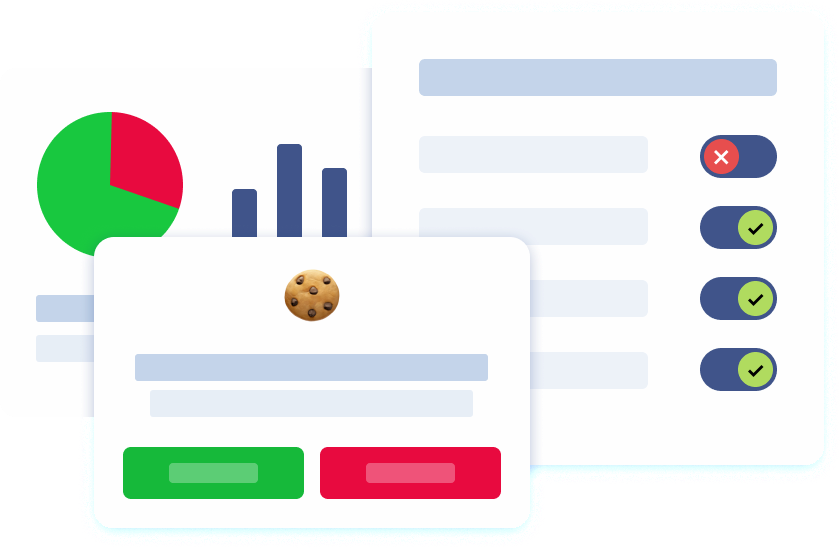
Cookie banners remain one of the most scrutinized areas for dark patterns. Regulators evaluate whether these banners provide equal prominence to accept and reject options, whether they rely on misleading language, and whether they impair user autonomy through design choices.
Consent management platforms must evolve to meet stricter expectations. They should support clear user interfaces, enable easy withdrawal of consent, and provide comprehensive logs of obtaining consent. These capabilities are essential for demonstrating compliance with both the Federal Trade Commission expectations and state laws.
Accurate consent signals also play a critical role in downstream data collection. If consent is obtained through a deceptive design, it may not constitute valid consent, potentially invalidating the legal basis for processing sensitive personal information and other data.
Recordkeeping, Audit Trails, And Proof Of Consent
One of the most significant developments in regulating dark patterns is the emphasis on documentation. Businesses are expected to maintain detailed records proving express informed consent, including timestamps, user identifiers, and the exact user interface designed at the time of consent.
These audit trails must be robust and verifiable. This includes storing versioned snapshots of consent banners, tracking updates to design elements, and linking consent events to data collection activities. Such documentation is essential when responding to enforcement actions or audits by law enforcement agencies.
Retention practices should align with regulatory expectations, often requiring businesses to keep records for multiple years. Without sufficient documentation, even compliant processes may fail to withstand scrutiny.
Penalties, Remedies, And Litigation Risks For E-commerce And SaaS
The financial exposure associated with dark patterns can be significant. Civil penalties are often calculated per violation, meaning that high-volume subscription services or online service providers may face substantial fines if noncompliance is widespread.
Regulatory remedies frequently include refunds, injunctive relief, and mandatory compliance programs. Businesses may also be subject to long-term monitoring or oversight, particularly if their practices are deemed to have a substantial effect on consumers.
Beyond regulatory enforcement, private litigation poses an additional risk. Class actions and enforcement by other law enforcement agencies can amplify both financial and reputational consequences, especially for businesses that repeatedly engage in deceptive practices.

Practical Compliance Checklist For Designers And Legal Teams
Designers and legal teams should begin by auditing all user interfaces for elements that may manipulate users or impair user autonomy. This includes removing pre-ticked boxes, simplifying language, and ensuring that choices are presented clearly and fairly.
Next, businesses must confirm that cancellation mechanisms match the ease of the sign-up process. Requiring consumers to call during normal business hours or navigate complex flows may be considered a deceptive trade practice.
Finally, teams should ensure that all pricing information and hidden fees are disclosed upfront. Comprehensive documentation of obtaining consumer consent, including express consent and an unambiguous indication of agreement, is essential for compliance.
Best Practices To Avoid Dark Pattern Liability
Avoiding liability requires a shift toward ethical and transparent design. Businesses should focus on creating user interfaces that respect user autonomy, provide clear options, and avoid deceptive practices.
Plain language is essential. Labels should clearly describe the purpose of data collection and avoid misleading or deliberately confusing wording. Testing flows with users can help identify issues that may impair the consumer’s ability to make informed decisions.
Ongoing compliance efforts are also critical. Regular audits, updates to design elements, and integration of privacy-by-design principles can help businesses stay aligned with evolving regulations and reduce compliance risk.

Emerging Trends In Privacy Laws And Regulating Dark Patterns
The regulatory landscape continues to evolve, with more state laws adopting strict rules on regulating dark patterns and protecting consumers. The emphasis on symmetry of choice, transparency, and valid consent is likely to expand across jurisdictions.
Emerging trends include increased scrutiny of algorithmic nudges and personalized design strategies that may manipulate users. Regulators are expected to broaden definitions of dark patterns to address these practices, particularly as technology becomes more sophisticated.
For businesses, demonstrating compliance will become a competitive advantage. The ability to provide clear documentation, transparent user interfaces, and robust consent management processes will be essential in navigating the future of data privacy and consumer protection.
Conclusion
Dark patterns have transitioned from a controversial design tactic into a clearly regulated area of consumer protection and data privacy. The federal trade commission and state laws have established a framework where deceptive design, misleading language, and manipulative user interfaces are treated as serious violations.
For businesses, the path forward is clear: prioritize transparency, respect consumer autonomy, and ensure that obtaining consent is both fair and verifiable. Those that adapt will not only reduce legal risk but also build stronger, more trustworthy relationships with their users.